Suicide Silence are obviously musical pioneers. As the lead singer so eloquently pointed out in an interview – some people just can’t see the inherent virtuosity of dumbing down your music.
They obviously understand metal fans, and what drives them. It’s not like there was a scientific study that proved metal fans (like classical music fans) are innately attracted to grandiosity and technical prowess in music.
And the majority of metal fans certainly aren’t weirdos. Observations to the contrary have never been the subjects of academic study (by people like Deena Weinstein), or noted by the artists themselves.
Suicide Silence’s Methods are NOT Transparent and Gimmicky
They’re certainly not using the “Metallica Defense” to justify the musical direction they’re taking on the new album.
And Suicide Silence are totally above playing the elitist card. They’ve obviously gotten some very sound advise from their producer, who is a vital part of the network of metal news we metalheads rely on.
How could Suicide Silence fail utilizing a winning recipe like that? Isn’t doing the same exact thing one of your professional peers did last year the definition of pioneering?
The SS crew couldn’t be admitting that deathcore is stagnating. Or that the next step (for deathcore) is it’s inevitable decline. And it’s certainly not 10 years too late for a genre with so much diversity to expand. If it was, it would have progressed to the phase referred to by sociologists as “crystallization”, where a metal genre becomes embedded and rigidly defined. And if that was the case, we’d see a bunch of fucking deathcore clone bands playing the exact same song (exactly like what happened to hair metal).
But that’s not the case, right guys? Like, other metal bands weren’t noticing the crystallization of Deathcore (and praying for it’s inevitable demise) 7 years ago? Right?
Suicide Silence Definitely Knows Who Listens to Their Music.
Suicide Silence is obviously not commercially inflated faux metal from a genre that predominantly caters to 16 year old girls (that warrants comparisons to nu-metal). So, it’s safe to say the introduction of clean vocals couldn’t possibly have anything to do with pandering to young girls that want to seem edgy, right? It’s about branching out as artists, right?
Diagram displaying Suicide Silence’s Definition of “Death Metal Elitist/General Metal Elitist (Patch Wearing Weirdos)
Q: Where can you find Deathcore fans, Death Metal Elitists, and “General Metal Elitists” (Patch wearing wierdos)?
I’ve been wondering where all the deathcore fans, death metal elitists, and patch wearing metal elitist weirdos hang out. Metal Elitists are well known for their love of the Insane Clown Posse. It just goes without saying.
Or maybe Suicide Silence is referring to the ‘elitist ones’ Whitechapel encountered at the Warped Tour. Because that’s another place to find metal elitists of all sorts.
Yeah, that must be it.
Suicide Silence have obviously got marketing to their fans down to an art – nay, a fucking science.
Could he impart some transcendental wisdom on par with these pearls of enlightenment from the mouth/keyboard of Ross Robinson?
What is the relevance of mentioning the head of a record label known for it’s metalcore and deathcore associations in a Suicide Silence article detailing the inevitable downfall of deathcore? Are producers and record labels counting on controversy to keep their names on the mouths of the general public as a form of life support for a dying genre? What is the meaning of life?
Musical Pioneers
I’m sure Suicide Silence will find innovative new uses for the dotted crotchet on the new album – perhaps in multiple songs. They’ll probably revolutionize deathcore by employing some sort of “down-tuning” (drop A, or something equally as innovative and unique).
I’ve been hearing a buzz about a new musical convention referred to as a “breakdown”, perhaps they will blow our minds by indulging in one or two on the artistic masterpiece coming out later this month. Maybe they’ll really let loose and use gang vocals – how fucking cool would that be?
If your (original) lead singer’s death is the most interesting thing about your band, the sky is the fucking limit.
The strangest thought hit me today – there are actually people alive and active in the metal scene that don’t know what it was like before the internet.
Stop and let that sink in for a minute.
(cliché reflective opening statement to blog post, check. god I’m getting good at this.)
Is the Internet the Last Major Metal Scene?
When speaking of a metal “scene”, generally people are speaking about a shared sub-cultural space where members are able to participate in the culture. For metalheads, this generally means bar and live shows. Or, at least, it used to.
With the advent of the internet, a person can completely immerse themselves in metal culture without ever physically meeting another metalhead. This isn’t without precedent – I have written previously about how metalheads had social networking before the internet. So really, the digital metal scene can be viewed as a natural evolution of the tape trading scene.
But this is a bit different. More all-encompassing. Scenes arise from the collective need for a sub-cultural space. The internet meets the needs of every metalhead, or at least allows for those needs to be met.
I’m not saying there won’t be local scenes in the future. Of course there will be, that’s the heart-blood of metal.
I AM saying there will never be another band (metal or otherwise) who gets big without the internet. Ever. So, what I AM saying is that the internet has become the largest possible metal scene – with pretty much every single metalhead on earth participating in some way, shape, or form.
The Internet Changed Everything
Metal’s Place in Society at Large
There’s a trade-off here. The best and worst thing about the digital metal scene is how easy it is to access and participate. Metal is no longer the pariah of the music world – it’s become (comparatively) safe in a cultural context.
There is always going to be metal that’s on the outside of what is considered “good taste” by the majority of Western Society – metalheads will make sure of that.
But Jesus Christ, when the President of the United States visits Finland and cracks a good-natured joke about the number of metal bands (per capita) – it’s safe to say the outsider status is gone.
So, lets take a brief look at how the digital age is affecting the unholy (hehe) trifecta of metal culture: Metal fans, metal bands, and the metal media.
How the Next Generation Experiences Metal (The Rise of Digital Metal Fans)
There is a generation of metalheads who, feasibly
never listened to heavy metal in an analog format.
never knew what purchasing music was like before Napster and other file sharing sites. (or torrents)
never had to stay up on a Sunday night to hear the ONE metal program on a radio station.
never had to play “album roulette”, going to a music store and finding the minuscule (if existent) metal section – and buying an album purely because it looked cool as fuck. Chances are, they won’t understand that every genre of metal has its own logo style for exactly this reason.
will never know what it was like to depend on ‘zines (specifically the classified section) to know what’s happening in metal.
have no idea what it’s like to be stereotyped by the police simply because they favor a style of music (well, maybe not as much).
have no fucking clue what the significance of MTV was to music in general, or why Headbanger’s Ball was such a big fucking deal.
have never paid 30 bucks for a CD
don’t have to rely on the metalhead “uniform” to find other metalheads.
This is literally a group whose experience with metal, and the metal community is so vastly different from previous generations of bangers as to seem almost alien. I think it’s funny – people have been so focused on how the internet and computers changed metal in the past few decades, that they’ve completely neglected to examine how it changed the fans (or even ask if/how it would).
Might it be logical to assume that, as their experience of metal culture is so vastly different – maybe it will change the fan base?
Metal Bands in the Digital Age (And the Digital Metal Bands)
Even the way new bands create and share music. Remember Job for a Cowboy? The first (and only, to my knowledge) metal band to successfully launch a major career in metal using Myspace? Fucking Myspace?!? I still remember getting messages and a friend request from the band when they were a bunch of unknown dudes from Texas.
Which brings me to deathcore. Sure, I shit on it all the time – 99% of deathcore bands are generic and boring. But if we’re being really, brutally honest here – 99% of thrash, death, and black metal bands are just as generic and boring. I write for an online magazine, and believe me – if the only good thing you can say about a band is that they have an old-school death metal/thrash/black metal sound or aesthetic – it’s a roundabout way of saying there isn’t much good you can say about the band.
Deathcore does have the distinction of being the first metal sub-genre to come to prominence through the internet. Metalcore stands kind of in between – half internet/half old-world. Djent gets a participation trophy.
Nowadays, bands don’t need to physically amass a following to be heard – they just need access to a computer and pro-tools. Self-releases are more common than ever. In fact, record labels seem like they’re becoming almost vestigial. Bands can crowd-fund an album and write exactly what they want.
Speaking of music production – I guess the “American Metal Sound” is totally a thing now. Essentially it just means you have crystal clear production values and a “full” sound, but I’ve heard people from outside the US use this term to describe a lot of the Thrash albums that came out this year (i.e. Testament and Megadeth’s 2016 releases). Not that this is purely a deathcore related phenomenon – the New Wave of American Metal certainly influenced this as well – but I think it’s a nice change.
Sure, there’s a certain aesthetic associated with the production values of classic metal albums. But you can’t tell me you want every goddamn metal album for all eternity to sound like it was recorded inside a garbage can.
But I digress.
The Digital Metal Media
So yeah, this is the first generation who got their metal related news purely in a digital format. I mean, sure, for novelty’s sake a few people might go out and buy a physical magazine or two. But the medium is simply outdated. The only reason to get them is to act like a hipster or for genuine nostalgia.
Dramatic Re-enactment of a “Dinosaur Metal” band
As such, a lot of the “dinosaur” metal publications were unable to get past their own bureaucracy (and mounds of paperwork) to get with the whole “information age” thing. Which isn’t really a bad thing, considering most of them got so far out of touch with the metal community. I’m really not sure how they kept going (Well, yes I am. They sold their souls and started catering to the tastes of 16-year-old girls. But that’s another topic altogether).
Interestingly enough, all the major metal news websites have conglomerated in exactly the same manner as the magazines did. Just like the old guard – they publish the exact same stories, they share writers, they cooperate on contests together. It’s a massive circle-jerk.
Lambgoat, Metalsucks, Metal Injection, Decible, theprp.com – they’re all in on it (example, they all use the blast beat network for their advertising). I guess life really does come full circle – reading these guys commentaries on metal culture is about as much fun as chewing on tinfoil (sorry, that’s an old person joke from way back in the day when they used mercury in fillings).
Capitalist bureaucracy at it’s finest, I tell you.
Metal’s Transition from Counterculture to Culture
Pretty much every metalhead who was alive and active in the scene before the internet remembers how things were. “How the internet changed metal” is a pretty popular topic to discuss in metal circles.
But I don’t think I’ve ever seen or read anything discussing the logical progression of the though/sentiment. If the internet changed metal bands, metal music, and metal media – isn’t it safe to say it significantly changed the fan base?
The biggest change I’ve noticed is that metal is no longer a counterculture.
Other sites have touched on the subject, but I don’t think anyone has really gone the extra few feet to discuss the logical implications (positive, negative, and neutral) for metalheads, and metal culture in general.
It isn’t hard to find other metalheads anymore. Besides going to concerts, hanging out at bars, randomly bumping into people in the metal section of your local music store, or (if you were lucky enough) having a metalhead crowd to hang out with when you were in high school – there was a point in time when it was actually a bit difficult to find other metalheads. We used to have to rely on “the uniform” (or people with a particular look) to find each other.
A positive aspect of this is that heads can now use visual cues other than band shirts to find one another. Facebook metal groups abound, metalheads create their own digital sub-cultural space in popular forums. I think we can all collectively agree that talking shit about Metal Sucks in the comments section of every single one of their articles is one of the purest expressions of sheer collective joy metal culture has to offer it’s adherents.
A negative aspect of this is that although it’s not hard to find metalheads, metalhead interaction on the internet will never be as satisfying as interaction in person. This doesn’t just affect metalheads, in general people fall into the trap of substituting online social interactions for face to face interactions – and this can be very unhealthy. It makes confrontation and altercation infinitely easier, and therefore more inviting. In person, confrontations are a lot less likely, and the results of a confrontation are generally a lot more amicable to both parties. So yeah, there’s that.
OK, enough of this touchy feely shit. Back to the metal.
With online participation, metalheads are better able to come to a consensus as to what constitutes a sub-genre, and what bands fall where on the heavy metal family tree. And nobody, I mean nobody, has done a better job of this than Banger Films.
Sam Dunn and the crew up in Canada are (in my opinion, and many others judging by their popularity) revolutionizing metal – by bringing all the little mini-cultures that constitute metal culture into one shared sub-cultural space for the express purpose of documenting and furthering metal culture as a whole.
If you haven’t already, I highly recommend subscribing to their YouTube channel. Their revues are top-notch, the sub-genre episodes allow people to democratically discuss a particular section of metal in-depth and decide, democratically, on which bands fit within the categorization being discussed.
A Quick Recap
Let’s do a “Five W’s” test real quick.
What changed? Metal culture
Who changed? The three major aspects of metal culture – fans, bands, and metal media
Where did the change take place? The internet, of course.
Why did the change happen? The internet provided unprecedented access to metal culture, allowing for a universal allocation of sub-cultural space regardless of geographic location.
When did the change take place? It’s still happening, arguably it came to a head in 2000 with the Metallica/Napster dispute.
Conclusion(s)
I would argue that the internet is not just a logical progression of metal culture – it’s the logical conclusion of metal culture.
When I say logical conclusion – I don’t mean that metal culture will be ending because of the internet. I mean that in terms of progress, it’s impossible for metal culture to move PAST the internet.
Tape Trading? You don’t have to peruse metal magazines and write letters, waiting on the postal service. New metal is literally at your fingertips 24/7.
Meeting new metal fans? Until there is a cultural space for social connections more efficient and all-encompassing than Facebook – there will never be a faster, easier way to meet and interact with other metalheads.
Metal news? Instead of waiting for magazines, we find out what’s happening in the metal universe almost in real-time. It’s just not possible to find things out any faster.
Metal bands don’t need to jockey for positions to be heard by major labels anymore – in fact, it’s (theoretically) possible for a band to gain mass popularity almost exclusively through social media (i.e. Job for a Cowboy, Vulvodynia, etc.).
Integration into greater culture? As much as is humanly possible – I don’t see people getting arrested for wearing metal shirts or being sent to camps for “de-metalizing” (a la the PMRC days of the 1980’s).
Maybe the police will stop using pictures like this in training manuals?
School shootings might still be blamed on metalheads now and then, but since the culture has become more visible (due to the internet) I think that’s a lot less likely. Occasional hate crimes against metalheads? Yeah, probably still a thing – anyone who looks “different” is going to be a target by small-minded clusters of mouth-breathers. With the “metal look” as big as it is right now in popular culture, I would even predict that sort of thing is on the decline.
In other words, because of how convenient and efficient a tool the internet has turned out to be – I believe the final frontier of heavy metal (the music and it’s culture) has been reached.
As anyone familiar with the Metal scene knows, taboo/transgressive subject matter is a pretty routine topic in metal music. As a matter of fact, it’s par for course. These subjects, due to their transgressive nature, are inherently serious in nature and cause heated discussion. This includes, but is not limited to, discussions of race and racism.
Now, you’ve got a collection of social outsiders (a fringe group) who routinely discuss taboo subject matter. By definition, racist groups and ideologies are fringe/outcast groups (at least in the United States) who routinely discuss taboo subject matter. They’re social outsiders, metal is outsider music. Therefore, it is logical to assume that certain parts of the metal community are racist – and by tolerating them metal culture as a whole is racist.
Due to historical fan demographics, there is a significant population overlap between white supremacists and metalheads (I’ve touched on the subject of heavy metal fringe groups in other posts). Both are cultures that are (historically) dominated by Caucasian working-class males.
But I believe this is, combined with the outsider status of the culture and penchant for transgressive subject matter (including “playful racism”, discussed below), is why a lot of people go on to make the assumption that Heavy Metal culture fosters racism, and in extreme cases it has been argued that metal culture is inherently racist.
However, there are large differences between the groups in relation to who is allowed to participate. For example, you don’t have to be a Caucasian or male to participate in the metal scene – and the diversification of the audience over the past few decades is a testament to this. In white power circles, however, members are Caucasian by definition.
Historic Treatment of Racist Fringe Groups (and Playful Racism) in Metal Culture
Historically, the metal community has policed itself against the normalization of racist groups within the community. The bands, the fans, the venues, and the metal media have all played a vital role in making sure that while racist groups are marginally acknowledged on the fringes (which, arguably, is better than full exclusion or inclusion) while not being tolerated or accepted into the main “body” of the culture.
However, there’s also always been a strain of what has been referred to by scholars as “playful racism” within the scene. It’s an odd concept, I know. People saying racist things for the pure purpose of reveling in the taboo nature of what is being said.
Example of “Playful Racism” in an excerpt of an episode of Metalocalypse:
By itself, it seems like it’s just racism covered with a thin veil to make it socially palatable by giving an aspect of deniability (in other words, you always have the outlet of saying “I was just joking”, or “I didn’t mean it seriously”).
However, taken in the context of the culture as a whole – it’s not just racism that’s thrown around casually. Pretty much any subject that’s “taboo” or “off limits” is fair game. Viewed in this context, faux racist jokes aren’t told because people think racism is good or funny – they’re told in the same context as a “dead baby” joke.
Example: Q: How do you make a dead baby float? A: 1 scoop ice cream, 2 scoops dead baby, and root beer.
Tasteless? Sure.
Hilarious? Yes.
Not because dead babies are funny, but because they’re not funny.
There are some flaws with this cultural mechanism, and I have no problem pointing that out. The argument can be made that it normalizes racism – which is a valid argument (until you put it in context). Because if it’s normalizing racism, it’s also normalizing dead babies.
Where Millennials Come Into the Equation
There seems to be this ongoing myth that the millennial generation is more tolerant when it comes to issues of race. And if you believe the SJW hype, they are. However, if you believe raw data and polls – millennials views on race (with the exception of interracial marriage) are almost exactly the same as their parent’s views, and the title of the first and most progressive/tolerant belongs to the gen-Xers.
Not only that, millennials have been incorrectly labeled as “post racial”, when it’s much more accurate to call them racially apathetic. The data behind such claims is based on polls that show the millennial generation (as a whole) is 93% ok with interracial marriages (as opposed to 92% of generation x – such progress!).
All in all, these things (while they aren’t good) shouldn’t be surprising. Generational racism is, well, generational – it’s nothing new. But when you combine the fact that millennials have been raised on a jargon of “colorblindness” without the ability to recognize or deal with racism in its various incarnations you’ve got a recipe for disaster.
We have an entire generation of people who believe that all people are created equal, and therefore every person has an equal opportunity to succeed. Concerns over the “reverse racism” of anti-discrimination laws has become a “thing”.
Couple that with “outrage journalism” (favored by people in all sorts of hipster media, I’m looking at you metalsucks), and suddenly anyone who is slightly outside of the virtue signaling culture is marginalized as a racist sympathizing conservative fascist outsider. Even if they have a predominantly liberal sociopolitical outlook, they’re labeled as an enemy of mainstream virtues and (by association) mainstream culture.
A borderline fascist movement that cloaks itself in easy-going permissiveness can make itself seem almost reasonable (arguably, this is something we saw at play during the 2016 American elections). And these sorts of movements are mirrored all across Europe.
So What Does All This Political Bullshit Have to do With Metal Culture?
I say this in pretty much every single cultural piece I write – Metal Culture does not exist in a vacuum. Every single political nuance on earth has the potential to effect it in a myriad number of ways. When you’re talking about population demographics, for example, this sort of thing becomes important.
Why? Because metal culture constantly replenishes itself with every successive generation of youth. With this particular generation you’ve got a group of people who:
were taught a failed lesson in colorblindness that has had some rather negative societal repercussions
exhibit a remarkable apathy towards racial issues
are slightly more racist than the previous generation
don’t know how to deal with real instances of racism (because they were taught to ignore it)
marginalize people who should be political allies based on trivial political differences
So we’ve discussed the relationship between marginalized people/groups and metal and population demographic overlap between heavy metal and white supremacist cultures. We then (briefly) discussed the relationship between these two groups in the past (specifically in the area where they overlap), followed by a discussion of the newest generation to be recruited into these social spheres (and how their attitudes towards race relations differ from prior generations.
Now it’s time to connect the dots.
What This all Means
The new blood in both cultures is a group of people who have grown up in the digital age, with unprecedented access to information. I believe this, in part, is behind the rise in “gotcha journalism” – exaggerating news events, scandal mongering, and sensationalism.
And this isn’t without precedent – in the United States this style of news was referred to as “yellow journalism“, and rose in the 1890’s as a result of the printing press bringing (then) unprecedented access to information.
This pertains to the metal scene because most major digital metal news publications practice some form of yellow journalism. And they don’t exist in a vacuum – most (American) millennial news outlets do the same thing – so the guys at Metal Injection and Metal Sucks (among others) are just keeping up with the times.
In the interest of full disclosure, I’ve been known to use some inflammatory headlines from time to time (hey, it does work) – the difference being that I generally try to avoid sensationalism for the sake of sensationalism.
Now, this (sensationalism/scandal/etc in news) in and of itself is not a bad thing. But nothing exists in a vacuum, and actions have consequences. If you continually write scandalous articles about racism in metal, create scandals about racism in metal, and exaggerate the scope and effects of racism in metal – then eventually your audience becomes desensitized to the subject. In other words, you’re putting racism on the path to normalization.
I honestly believe, in my heart of hearts, that most people believe they’re doing the right thing by constantly casting the spotlight on what they perceive as racism in metal. Granted, the motivation doesn’t come from a place of altruistic contribution to the metal scene – they’re virtue signaling and taking advantage of an easy “gotcha” story to further their own careers and agendas (accruing sub-cultural capital and the like).
But I do believe they feel like they can further their careers and social justice at the same time without some sort of social cost. But the thing about putting things under a spotlight is that they tend to cast a shadow – and in this (metaphorical) instance the shadow of sensationalist stories gives safe refuge to the really dangerous shit.
Example:
Phil Anselmo’s “White Power” incident.
On the surface, it makes sense that major metal news sites would cover something like this. What he did was bad, and Nazi salutes are generally used as a universal gesture for white supremacist groups.
The problem here is figuring out if this action was inherently racist. Racism is prejudice, discrimination, or antagonism directed against someone of a different race based on the belief that one’s own race is superior.
Was Phil Anselmo directing the Nazi salute at audience members because of their race? I would argue he wasn’t (this is an argument of fact, not opinion). But don’t take my word for it, watch the video that sites like Metal Injection and Metal Stuff weren’t showing you…
If you watch closely, he’s not reacting to people in the audience due to their race. He’s reacting because they’re constantly heckling him and calling him racist. So what does he do? He says the most offensive thing possible.
Was it right? No. Is it a defendable action? Absolutely not. Was it racist? Nope. Racially insensitive? Yup. Totally. But that was the point. I don’t agree with what he did, but I know why he did it.
Enter Robb Flynn, who was freshly annoyed by Phil Anselmo saying he hated the “ni**er” era of Machine Head. Robb misdirects this statement by saying Phil meant he hated their album “The Burning Red”. I would argue he (probably) meant the album “The Blackening”, which included a song with these lyrics
“I’m a redneck and a faggot
The asshole in the rubbers
A wetback and a nigga”
This video starts with a full redirection (Robb spun statements to make himself look like a victim taking a stand), and it makes him look like the good guy. Such a good guy, in fact, that he made Metal Suck’s 25 Most Important People in Metal list.
Direct quote, “I don’t get how this shit is tolerated. I don’t get how this shit is even blown off as acceptable. Brushed off as acceptable.”
Note from Yours Truly: “I don’t know Robb, you tell me – you’re the one posing in a photo of people throwing up the sig heil. In fact, it almost looks like you’re tolerating it and blowing it off as acceptable. You fuckhead.”
Hey, I’m just one guy and that’s just my opinion.
Just remember, this is the guy who made that video. This is the guy “taking a stand against racism”, in the right-hand corner of this photograph. This is Metalsucks’ 24th most important man in metal.
This isn’t to say that Flynn’s overall message of the tolerance of casual/playful racism in the metal community is wrong. I actually agree with that. The message is fine.
But you need to take a step back and look at the motivation behind it (just like with Phil Anselmo). I think to an extent he (Flynn) doesn’t care for racism, especially in the metal scene. Robb has a history of allowing for racism in his social circles without doing anything about it (see the photo above, and the song lyrics) – but when he has a chance to publicly throw a high-profile character (Anselmo) under the bus for fame and profit he does so shamelessly.
Robb Flynn tolerating racism until he can profit from it isn’t an opinion, it’s a fucking fact. Yes, you read that right, profit.
It taints the message, and kind of makes you wonder who’s the real bad guy here – the guy who said something while drunk (to purposely offend hecklers who had no right to be giving him shit at a memorial gig for Dimebag Darrell), or the guy who is conveniently now a Social Justice Warrior and takes up a mantle of social acceptability (with profit and fame as the ulterior motive)?
Social Justice Warriors love black and white, tar-baby style arguments. By virtue signaling, the second you disagree with them you’re instantly labeled as a bad person and anti-whatever it is they’re standing for. If you question Robb Flynn’s integrity on this issue, you get sucked into the tar-baby argument that you are somehow pro-racist the second you disagree with someone who speaks against racism.
Utter bullshit.
So, Why is This SJW Faux Racist Bashing a Bad Thing?
I don’t think there’s anything inherently wrong with people being fans of Mayhem or Burzum – but I do think it’s kind of strange that the same millennial/hipster groups that celebrate bands that promoted hatred for minority groups (be it racism, discriminating based on religion, homophobia, etc) for transgressive purposes are the first to hate on a guy who appropriated a symbol of hatred for minority groups for a one-off transgressive purpose.
Yes, I’m calling bullshit/hypocrisy here. I calls ’em like I sees ’em.
And while all this is unfolding, and metal artists and metal media are soaking up attention and profiting off of playing the racist card – there are real, legitimate, scary style fucking racist metal groups out there.
Including the new face of the National Socialist Movement: Neo Nazi Hipsters (Nipsters)
They’ve been brewing under the surface for decades, evolving their recruiting tactics and their messages to make their messages more appealing to the general public, who are becoming more and more marginalized by a stagnating liberal culture.
For example – environmentalism. Once a staple of the liberal diet, more and more of these conservative white supremacy groups are adopting a pro-planet stance.
This means that, in terms of environmentalism, I now have more in common with some white supremacist groups than I do with (for example) the mainstream American Democratic party. It also means that liberal metal sites like Metal Sucks have something in common with white supremacist groups, so there’s that.
Long story short – I think the rise of the really bad racist groups in the metal scene is a reflection of their rise all over the world.
Back to the Premise of the Article
So, to answer the question as to whether millennials are responsible for the rise of hate groups in the metal scene… the answer is “sort of”. A lot of the metal styles that are popular with the younger crowds – hardcore and black metal – have also been co-opted by white supremacist groups in the forms of “Hatecore” and “National Socialist Black Metal” (respectively).
I think it’s a myriad web of correlation and causality. The combination of apathy to racial issues and the trendiness of being a social justice warrior (in the current generation) is a causal element – white supremacist continually evolve to offer what they like to refer to as an alternative to the millennial/SJW elements in popular metal (and culture as a whole, this is how the “alt-right” gained a foothold in popular culture).
The styles they’re using, hardcore and black metal, as a vehicle for the supremacist message is more of a correlation thing – these two styles of heavy music just happen to be popular within both millennial and supremacist cultures.
Millennials are not responsible for what white supremacist groups do
But they (Millennials/Hipsters) are responsible for how they react within metal culture; and the inevitable backlash. That backlash/reaction can be seen as a direct cause of the rise of right wing, racist movements on metal culture (which mirror those in Western Culture in general).
Their reaction was to question the professor, and in so doing they were defending the radical fringe elements of social justice warrior culture. This implies that Social Justice Warrior Culture is beyond reproach. And by saying that all SJW’s are beyond reproach, they took a hard-line stance that, by the existence of the argument, says it’s ok to teargas or mace people at metal shows if someone is offended by what they say. I’ve written about the articles, and given my thoughts on the SJW ethos and it’s inherent hypocrisy.
However, when hipsters/millennials/SJW’s partake in crybaby, sensationalist yellow journalism that stands up for the tear gassing and macing of metal fans – they’re forcing any metalheads who disagree (for any reason) into the same corner as the white supremacists.
In other words, a big part of the reason people are sympathetic to these nationalist/supremacist groups is because the SJW’s have been painting themselves into a corner.
If metalheads are responsible for homophobia, racism, and the like within the culture – then millennials/hipsters need to own their shit and accept responsibility for the cancerous elements of their own sub-culture.
I think there’s an applicable analogy about people living in glass houses (or something to that effect).
Phil Anselmo has taken a lot of shit in the past year over the alleged “white power” incident at Dimebash. Internet Social Justice Warriors jumped all over it, condemning him and riding the wave of publicity to further their own agenda and public appearance.
On one hand, I kind of get where people are coming from. Once someone throws the racist label at you, it has a tendency to stick (as Mr. Anselmo has discovered through the years). On the other hand, if metal culture is really a brotherhood – where the fuck is the benefit of the doubt? Where are all the people standing up for a brother getting unfairly slandered?
Every fucking word this man put out is something I’ve expressed at some point on this blog. Everything I said on my initial article about the “Dimebash Incident”, my sentiments on Virtue Signaling and Social Justice Warriors in Metal, Robb Flynn and his ulterior motives throwing Phil under the bus, fucking all of it.
It makes me wonder if he’s a fan of Metal Stuff. That would be the fucking coolest.
(Phil, if by some fucking long shot you’re reading this, you’re the fucking man!).
It’s no secret that I’m a huge fan of the sub-genrification of metal. There’s just so much metal out there, they’re kind of necessary. A sub-genre is essentially a quick label used (mostly by fans) to describe bands with similar sonic characteristics.
For pretty much every major sub-genre, most fans will be able to list a couple big name bands that exemplify the sound. With Thrash, you’ve got the big four (bay area) and the big Teutonic four (Germany).
Death metal has bands like Death (obviously), Morbid Angel, Deicide, Nile, Obituary, and Suffocation bringing up the oldschool end of things – and (being the most popular sub-genre in the world) probably several thousand other bands branching off into even more subgenres.
With Black Metal you’ve got the first wave guys like Bathory, Celtic Frost, and Venom. And then there’s the second wave guys who pretty much defined the genre as most people know it today – guys like Darkthrone, Mayhem, Burzum, etc.
Power metal, Doom, Melodic Death Metal, Glam, Nu Metal, Grindcore – they all have very distinct, easily identifiable sounds. Within a couple of second of listening to any song within these genres, it’s easy to identify where it belongs in the metal family tree.
Except for one. Groove metal.
It’s weird – this is one of those genres that a lot of people know about. Everyone I’ve ever talked to about the topic can list off a few Groove Metal bands. Which is great – except there’s almost zero overlap. If you talk to three different metalheads about Groove Metal and ask for a list of Groove bands – you’re most likely going to get three very different lists. Even the definitions of Groove Metal vary from person to person. It seems like the only band that people can consistently agree falls in the Groove category is Pantera.
Now, there is a pretty big group of people who argue that Pantera (post glam, naturally) is a thrash band.
The argument has some merit, but I have some problems with it. Pantera, like most thrash bands, is a very aggressive riff oriented outfit. However, while thrash is typified by fast tempos, Pantera is generally a mid tempo band by comparison. Also, they generally tend to ride what’s known as “the money riff” for the majority of a song. While this isn’t unheard of in thrash, in my experience it’s not the norm.
Fleshing out a Genre from the Middle Ground between Genres
So seeing as Pantera is a generally agreed upon forefather of the Groove genre, their relationship with thrash metal makes defining Groove Metal much easier.Bearing this in mind, I would like to express a few opinions that will (probably) be a tad unpopular.
Because of the black album, I contend that Metallica were as influential as Pantera in the consolidation of Groove Metal as a genre. Think about it, the things people complained about on the album – catchy riffs, predominantly mid-tempo (as opposed to the breakneck pace of Thrash). They ride the money riff for the majority of songs. It’s mid-tempo Thrash. It meets all the criteria of Groove Metal.
Sepultura’s album “Roots” is widely credited as a Nu Metal album. Interesting thought, but there is nothing remotely rap/hip hop oriented about the album. I would argue that Groove metal and Nu metal developed side by side, and ended up having a lot of similar qualities in terms of sound. I don’t think anyone with half a brain cell can lump this album in the same category as the Linkin Park discography – I lump Roots squarely in the groove metal category.
Slayer’s misfit album, “Diabolus in Musica”, is described by the band themselves as an attempt to jump on the Nu Metal bandwagon. The only problem is, all they did was down-tune and ride some grooves. No DJ’s, no rapping – I also classify this album as Groove.
We’ve already touched on the Nu Metal/Groove connection a bit, but now might be a good time to reiterate. Groove and Nu Metal share a timeline (and in many cases, an audience) – they formed a genres around the same time, and they influenced each other heavily. Example – it’s no secret that Sepultura were heavily influenced by Korn’s first album when they released Roots (another reason people try to lump the album in the Nu Metal category).
Nu Metal is very groove-heavy, and it’s safe to say there’s a significant amount of overlap between the genres.Example: Machine Head did a one off nu-metal album before returning to Groove Metal. This is a perfect example of the overlap between Nu Metal and Groove Metal:
Nu-Metal Machine Head
Groove Metal/NWOAHM Machine Head
Which leads me to the New Wave of American Heavy Metal (which was as much a movement in metal is it is a genre). Besides Machine head, bands like Lamb of God and Chimaira (flag-bearers of the NWOAHM) also fall squarely in the Groove Metal category.
In fact, I would contend that most of that wave of metal bands from the 2000-2010 era wouldn’t exist without Groove Metal (specifically Pantera, but all those Groove pioneers played a part in paving the way for the NWOAHM).
These bands have been known, on occasion, to even pay tribute to the late great Pantera…
Not that only NWOAHM bands cover the Groove legends, but there’s enough bands that have paid tribute through the years (even before Dime died) where you can make a pretty solid inference as to the influence of the band (and therefore the genre).
In Conclusion
Probably the strangest thing about Groove Metal is that it just kind of “happened”. It wasn’t like Thrash or Death or Black metal, where you had a scene with several bands that fleshed out the sound and defined it in a short amount of time. Instead it developed over the course of (at least) two decades, influencing at least two major metal movements as it went.
This is the only time an entire genre was (or ever will be) formed in the empty space between extremely fast (i.e Death Metal, Black Metal, Thrash, Speed, etc) and extremely slow (Doom and it’s derivatives) tempos.
The only genre with stranger origins (in my opinion) would be Djent – who the fuck names a genre with an onomatopoeia?
2015-2016 has been an unprecidentedly good time for metal. We’re in the middle of a “metal bubble”, the market is saturated with excellent material. Not sure how long it’ll last, but (seeing as there isn’t anything really incredible slated to release in December) I thought it would be a good time to sum up Metal Stuff’s best releases and biggest dissapointments in metal: 2016 Edition.
This one hit me out of nowhere. I saw something about the release of the album on facebook, checked it out, and BAM. Blown away. Probably one of the most pleasant surprises I’ve experienced this year.
It’s an all-star lineup of metal musicians in a modern (and metallic) interpretation of Antonio Vivaldi’s masterpiece “The Four Seasons”. And by All-Star I mean they have members of Symphony X, Testament, Unleash the Archers, The Scorpions, Helloween, Within Temptation, Stratovarious, Savatage, Trans-Siberian Orchestra, Soilwork, and a whole fuckload more.
I really can’t say enough good things about these guys, this is a piece I would reccomend to metalheads, fans of classical music, and just about evreyone inbetween.
I first heard this album through my side gig doing reviews for Hard Attack Magazine. No bells, no whistles, no frills. Just excellent (old school style) death metal with horror b-movie samples. If you’re into old school death metal – be sure to pick up a copy.
Have to admit, I was pretty eagerly anticipating this album. I participated in the crowdfunding effot they put forth to make the album happen, I went and saw them live twice in the year leading up to it’s release. And I wasn’t dissapointed one bit.
This is easily his best work since “Hellbilly Delux”, and while he hasn’t completly strayed from the hard rock sound, the band certainly went in a more metallic direction. This is the first album the band’s put out in years that I can listen to from start to finish without skipping a single track. If you’re a Zombie fan, you won’t be dissapointed.
Kick ass album, read my full review here. Brutal Italian tech death that doesn’t sacrifice on the low end (or become riff-salad). Very highly recommended, this album melts faces.
Sooooooo fucking good. Adding layers of atmosphere to melodic death metal seems like a pretty big risk, but these guys took it and the result was (in this author’s humble opinion) a huge fucking success. I would go so far as to say this is the Melo-Death version of the album Opeth should have released. I’ve always liked the band, but they were never really at the forefront of my musical collection. This album changed that a bit, I’ll be keeping an eye on these guys now for sure.
Proggy and ambient, while still managing to retain the soul of melodic death metal – I highly recommend this album to anyone who will listen. And a few people who won’t.
I’ve been a fan of Devin Townsend’s work for over a decade now, but I had never given this side-project of his a listen before this year. And I’m glad I finally did, the man’s a fucking genius. His mix of electronic/ambient music and metal is flawless. Transcendence is a fucking masterpiece from start to finish.
This album was another pleasant surprise for me in 2016. They ran an (apparently) successful Facebook advertising campaign for months before the album released – so when it dropped that whole “name brand recognition” thing they talk about in advertising took effect. I checked them out just to see, and boy am I glad I did.
Excellent prog metal that ranges from melancholy to borderline brutal, with cleans and screams for days. I’ll be adding this album to my vinyl collection shortly after the holiday season ends (when I actually have money again).
This one was no surprise, I’ve been listening to these guys for about 2 decades now (since Destroy, Erase, Improve was released in 1995).
I have to admit, I was nervous about this one. I’m not a huge fan of Koloss or Catch 33, and I thought there was a good chance they’d continue in the “artsy” direction of concept albums and slow songs. Boy was I wrong, this is a return to Chaosphere-level heaviness.
Admittedly, I have some very strong (and sometimes conflicting) opinions when it comes to the style of black metal known as “post black metal”. I’m hesitant to embrace “post” anything, and (at least in the US) the post-black metal scene is nothing but a bunch of whiny hipsters aping black metal music to seem edgy, when in reality all they’re doing is playing shitty alt-rock with a few black metal elements thrown in.
Saor, to me, embodies the exact opposite of this. It’s a solo project hailing from Scotland, and let me tell you this guy is a fucking artist. He’s the real deal, and a wicked cool guy to boot. He nails the black metal aesthetic and combines it with traditional celtic instruments to create soundscapes that are melancholy and ambient, without sacrificing some of the pure fucking rage at the heart of real black metal.
This guy is pretty much single-handedly responsible for making me redefine what I consider “heavy music”. Nothing but good things to say about this band, and this album simply cements him as a consistently solid and groundbreaking artist.
This album will rip you a new asshole. Then it will rip your new asshole a new asshole. I think you can see where I’m going with this. By the end of the album you’ll be shitting yourself out of your asshole’s asshole’s asshole.
This album doesn’t let up for a goddamn second. Full on brutal tech-death. Who the fuck knew Spain could produce (basically) the perfect death metal band? Holy fuckshit. I want to buy two copies of this album – one to listen to and the other to leave unopened for posterity. I’ll be telling my fucking grandchildren about how brutal these guys are.
Yo dawg, I heard you like blastbeats. So we put blastbeats on your blastbeats.
In all seriousness, no human on earth has any business playing as fast as the drummer does. This British teen duo actually makes deathcore tolerable. Scratch that, enjoyable. Not quite as good as their first album, but still one of the best albums this year.
Not going to front like I’m some O.G. who’s been listening to them since “Harvest Wombs” – I came across this band by chance right after their previous album, “The Flesh Prevails”, was released. I was just surfing YouTube and liked the album artwork (Totally a valid way of finding new music, it’s scary how good YouTube has become in recommending things you might like). I didn’t listen to anything else for a week, and turned a few of my coworkers on to the band.
When I heard they were releasing a new album I was super fucking stoked, and I wasn’t dissapointed. Every track is pure fire, and I still listen to this album at least once a week. I love the fact that they retained the ambient/brutal sound while making sure that each album has it’s own unique sound, atmosphere, and identity. Easily one of my favorite bands period.
I’ve been a fan of this band since I was street teaming for Nuclear Blast pre-2006, and I have to admit I find it pleasantly odd/surprising that a band I’ve listened to for years is becoming as popular as they are. Sabaton is easily the fastest rising band in metal, and they deserve it. These guys are relentless road dogs, with a solid live show. The fact that you learn more about history from a Sabaton show than you do in an entire year of public school in America is just the icing on the cake.
Plus, they wrote a song about the Scottish battle of Bannockburn (that pays tribute to William Wallace and Robert the Bruce) – what’s not to love?
These guys are hands down my favorite black metal band. Every album they release is consistent while remaining stylistically fresh and distinct. “Where Shadows Forever Reign” is, in my opinion, their best material to date – and they’re gaining a lot of well deserved international attention because of it. This includes their fair share of controversy – earlier this year they garnered a lot of attention due to members of a local Romanian government announcing they would allow a church-based political group to vet which bands would be allowed to play in the area (in direct violation of the Romanian constitution). This was a direct response to Dark Funeral’s show at Bucovina Rock Castle.
I don’t think a lot of people realize that bands like Dark Funeral and Behemoth are bastions of free speech in that part of Europe, as many Eastern European countries are firmly in the grip of a very conservative church (the Russian Orthodox Church, especially, seems to be radically motivated against heavy metal music).
Even without all the controversy – this is a solid fucking album that I listen to with some regularity. Lord Ahriman is a fucking musical genius.
Easily the best album release this year. Probably the one I anticipated the most, my full review of the album can be found here. Heavy metal isn’t a contest, but if it was Testament would be winning. I’ll just sum my thoughts on this album up from the first paragraph of my review;
“The “Thrash Revival” has been in full effect since 2015 – it seems like every major player from the Bay Area Thrash scene is back in the studio pumping out the jams. Testament stands out among these giants – delivering, hands down, the best Thrash release of 2016. In fact, I think ‘Brotherhood of the Snake’ deserves a nomination for the best metal album of 2016, period. Considering how good ‘Dark Roots of the Earth’ was, I had high hopes for Testament’s new album. Brotherhood of the Snake not only met my expectations – it exceeded them (and then some)!”
Honorable Mentions
Abbath – Abbath (huge fan of the guy, not as good as his work in Immortal)
Megadeth – Dystopia (This album made me a fan of Megadeth)
Fleshgod Apocalypse – King (Criminally underrated band, excellent release)
Rotting Christ – Rituals (Not their best work, but really quite good)
Killswitch Engage – Incarnate (Second album with Jesse Leach back on vocals, fantastic album!)
Otep – Generation Doom (has a few good songs, but has some stiff competition this year for best album)
Aborted – Retrogore (these guys never put out a bad album)
Hatebreed – Concrete Confessional (If you’ve heard one Hatebreed album you’ve heard all of them – good but not great)
Dead by Wednesday – The Darkest of Angels (Love these guys – from the same scene as Shadows Fall)
Death Angel – The Evil Divide (excellent and diverse Thrash album)
Nails – You Will Never Be One Of Us (Quite the pleasant surprise this year)
Be’lakor – Vessels (Good melodeath, if a little bit stereotypical of the genre)
Brain Drill – Boundless Obscenity (Jesus Christ, so good)
Despised Icon – Beast (Triumphant return of a deathcore band that doesn’t suck)
Running Wild – Rapid Foray (These guys are legend)
Sodom – Decision Day (German Thrash, awesome album)
Vader – The Empire (Pure gold)
Starkill – Shadow Sleep (I helped crowdfund the album, was not disappointed one bit)
In Flames – Battles (Had a few good songs, better than their last album)
Metallica – Hardwired to Self Destruct (They set the bar so low for the past 30 years that even a sub-par thrash album is praise worthy)
Avantasia – Ghostlights (just good fun!)
Anthrax – For all Kings (hooray for thrash revival!)
Entombed A.D. – Dead Dawn (death’n’roll done right)
Lacuna Coil – Delirium (Surprisingly good)
Gojira – Magma (Good, but not my favorite)
Amon Amarth – Jomsviking (Awesome album, but not quite good enough to make my top 15)
Metal Stuff’s Biggest Disappointments in Metal, 2016 edition
Considering the lineup changes DevilDriver went through in 2015, I tried to give this album a little wiggle room when criticizing it. 2 guitarists, no bassist, half the band is green. They didn’t really have time to get together and synchronize as a band – this album sound to me like a record company rushed them to meet a deadline. It’s not bad, but to call it anything other than a disappointment would be disingenuous. I hold DevilDriver to a pretty high standard – Dez is a goddamn genius as far as metal is concerned. I hope their next album will be a little better.
This fucking guy. Don’t get me wrong, I love Machine Head – and their album from last year (Bloodstone and Diamonds) was fucking excellent. I just can’t take Robb Flynn seriously. He’s a fucking attention whore who tries to stay socially relevant and apes Corey Taylor to do so. He’s an mildly successful social chameleon at best, and an overreacting turncoat bitch at the worst. His treatment of Phil Anselmo in the media was fucking horrid.
Maybe I was hoping for “Hail the Apocalypse Part II”, but this album fell flat for me. Which sucks, because they’re a very cool band who’s been underrated for the majority of their career. This album just didn’t clique for me, there wasn’t one song I can honestly say I enjoyed – just a massive disappointment.
I can’t quite put my finger on it, but this album just didn’t feel right to me. Like, maybe it was a bit too rushed or under-produced. Which sucks, because Christian Älvestam is my favorite metal vocalist – the guy’s easily the hardest working man in metal and super talented. From Scar Symmetry to Svavelvinter, Torchbearer, Miseration, Quest of Aidence, and all the fucking songs he’s lent vocals to – this guy is the fucking man. He shits excellence, except this album. I feel like he should have spent a little longer perfecting the songs, and not rushing to release a double album.
It’s sad to see a halfway decent band on the downswing of their career. They tried to stay relevant by releasing a song bashing “metal elitists”, and ironically that’s what seems to have tanked their career. Maybe the elitist ones were correct.
Bands like this are the reason I despise Deathcore. They have one tolerable album, and if I’m completely honest it’s only 50% tolerable (the first half).
From every single band on their roster, to the act of completely selling out the image of the Summer Slaughter tour to sell a movie starring the lead singer of the Blackveil Brides, the continued existence of Sumerian Records bothers me. Apparently, in the metal scene money = credibility in some circles. Puke.
I don’t make it a secret that I fucking hate hipsters. They seem to have the innate ability to ruin anything. I can’t wait till hipster metal is no longer a thing.
I respect when an artist or band wants to branch out, but it doesn’t mean I have to like it. Opeth has earned the right to do whatever the fuck they want, but that won’t stop me from getting my hopes up (and consequently having them dashed on a rock to the point of near death) every single time they get ready to release a new album. The band even signed to Nuclear Blast and were allegedly down-tuning for the record. I was so hyped. I heard the first single, “Sorceress” – SO EXCITED! Then the album dropped, and what transpired afterwards can only be referred to as one of my biggest disappointments of 2016. Fucking artsy prog from a band that had (at it’s peak) some of the best fucking death metal vocals ever.
Christ, stop capitalizing on the metal god. For fucks sake, he’s dead. Let him rest. It sounds cool, but I really dislike the idea.
As opposed to the Lemmy hologram at the Rainbow that randomly offers you cocaine and compliments your appearance when you walk by. That’s probably the most fitting tribute ever.
The Heavy Metal sub-culture is a patchwork tapestry of inter-related scenes and subcultures known as a bricolage culture. Viewed as a whole, it can be generalized that it’s dualistic in nature.
I’ve written articles detailing the inherent divide in heavy metal, as well as the current incarnation of that divide. Building on this body of work, the purpose of this article is to discuss the nature of the relationship between the mainstream and underground factions of the culture with the express intent of shedding some clarity on the nature of Heavy Metal Culture as a whole. Specifically, the nature of discourse between members of the culture in relation to the music.
Metal Culture is Inherently Populist
Due to societal reactions to metal since it’s inception, heavy metal culture at it’s core is inherently populist in nature.
What I mean by this is that heavy metal is a musical style that caters to the needs and desires of the fanbase – the consumers tell the artists what they want. This is exactly opposite to the business model of musical culture in general – where major labels and musical oriented media (from now on I will refer to it as the Pop Machine) tell people what to like.
Now, the standard musical model of “taste-makers” telling consumers what is good/popular has it’s benefits – mainly that musical boundaries are clear and concise. There is little to no room for discourse, because musical definitions and standards are pre-defined for the consumer. The consumer is free to take it or leave it, and discussion is set within certain parameters. However, the entire setup is contrary to what a lot of people understand art to be – a manifestation of individualistic expression that exists for personal interpretation.
One of the things that the pop machine has been pretty consistent about is it’s rejection of metal music. Since rock critics first started writing about Black Sabbath in the early 70’s, metal has been institutionally ignored, discarded, set to the side, and left to it’s own devices. Normally, this would mean the death of a musical movement – as a lack of radio play and media coverage by the pop machine is meant to squash out artistic movements that do not conform to the pop machine standard.
The Reactionary/Oppositional Component
A lot of the modern day prejudices against metal bands and fans are a direct result of the pop machine. The very survival of the musical style required a following that, in time, would become a culture. Critics touting the music as a low-brow art form that caters to the lowest common denominator since the 70’s literally set the tone for a key aspect of metal culture – it’s inherently oppositional nature.
This nature served it well in the decades that followed. In the 80’s metal become the moral panic of the day – it was used to scapegoat aspects of the culture that then (then) conservative majority disliked. This peaked in the now infamous PMRC campaign that led to a (partially successful) congressional hearing in the United States relating to the censorship of ALL music.
Conservatives opposed heavy metal culture due to it’s inherent opposition to authority, and Liberals opposed it due to the admitted hedonistic nature and low-brow appeal. The church opposed metal culture because, well, metal culture opposed the church in most cases. The music and it’s culture were under constant scrutiny and assault for the better part of a decade. This is not an environment that breeds “happy go lucky” or “inclusive” cultural traits. And the 90’s weren’t much better for metal. The police were trained to target metal fans as criminal lowlifes. The pop machine declared metal dead (wishful thinking?). When a few sick kids in Columbine got together and planned a horrible school shooting, heavy metal was the scapegoat. And so on, and so forth.
A Quick Recap
So, we can see that for (at least) the better part of 30 years heavy metal culture continued to exist specifically because of it’s oppositional nature. And the nature of that culture is reflected in it’s membership. Metalheads, by and large, have a confrontational and aggressive component to their personalities. It’s not up for debate, it’s just a fact. This may seem contrary to scientific studies that state exactly the opposite (that metal fans are creative, easy going, introverts with high self esteem – closer to the profile of a classical music fan) – but it all makes sense in context, so please bear with me as I stumble through an explanation.
I think metalheads, in large part, are attracted to metal because it offers a healthy outlet for negative emotion (i.e. the aforementioned aggressive/confrontational proclivities). Without all those pent up, negative emotions an individual is better able to function – so the personality traits displayed in scientific studies are expressed.
So, while metalheads may be more well adjusted than your average person – they still retain an inherent combative/oppositional nature. The culture reinforces this, and the attitudes then reinforce the cultural position – it’s cyclical.
Back to the Present Day
Applying this to the present state of heavy metal gives a little context and clarity to the situation. As noted by Sam Dunn in one of his Banger segments (I believe it was the one discussing metal in popular fashion) – heavy metal has lost a lot of it’s “outsider” status. It’s not as culturally threatening as it was even a decade ago. As such, major opposition to heavy metal has virtually disappeared – but that confrontational nature still exists. The most common expression of this is through infighting.
Some people might scratch their heads at this, but it makes perfect sense. I’ve heard metal culture referred to as a “big family”, “friends you’ve never met”, and a bunch of similar pseudo-hippy garbage terms. A more accurate description would be that metalheads constitute a “neo-tribal culture” based around a common appreciation for an art form.
So, tribe/clan/family unit are all pretty much synonymous – but there’s an inherent flaw in the way that most people view these terms. The problem is that they’re using a romantically charged view of a family unit or tribe. We’re conditioned as individuals to view families as some lovey-dovey unit that never disagrees. The reality of the situation, whether you like to admit it or not, is muuuuuch different.
Reality v.s Expectation
So, however you want to frame it, the reality of the situation is that the “metalheads are a family” comparison is very accurate. Anyone who feigns surprise that metalheads are going to argue is only kidding themselves (and clinging to a romanticized false notion of a family). It’s as natural as tribal warfare, sibling rivalry, or family feuds (those colloquialisms weren’t just plucked out of thin air).
The thing is, there’s another side to this. Besides all the bickering and feuding – there’s an unwritten rule that applies to both family members and metalheads. I’ll give an example – I’m the only person allowed to talk shit about my family. If anyone else does it, they get the business end of my entire fucking family.
It’s very similar with metal – and this isn’t just theory. Remember the PMRC hearings? Death metal and Thrash weren’t the direct target of that scandal – it was (predominantly) hair metal. Was Dee Snider left to fend for himself? Fuck no he wasn’t – because the only people who can bash hair metal are metalheads.
The same principle stands true today – if there was a large entity attacking heavy metal (using a metalcore or deathcore band as a scapegoat), they would meet with a much larger resistance than originally anticipated – because that’s how the metal machine operates (note – blackgaze isn’t metal so, assuming they managed to offend anyone, I personally would totally throw them to the wolves).
Conclusion
The infighting within metal culture is a good thing, and it’s totally natural. Granted, some of the bigger sites (that started as independent but have since become part of the pop machine) might egg it on for money and website traffic – but they’re not pulling conflict out of nowhere. It’s a natural expression of metal culture, and an acceptable form of participation that (among other things) creates an environment where competition is encouraged.
Competition in the metal scene creates better music.
Last I checked, that’s called winning.
I guess the message here is that newcomers to the metal community need take a step back so they can see the forest for the trees. Because Metal Culture fucking rules, infighting and all.
The global metal community is a strange thing. Seeing a global “bricolage” culture come together in a single shared subcultural space is, to say the least, interesting.
In my opinion, one of the most interesting aspects of the online metal community is watching the divide between two opposing factions (that exactly mirror the divide I laid out in a previous article entitled “The Two Faces of Metal“) – mainstream v.s. underground. Essentially, both sides have the same argument – it’s “us” versus a vague/undefined “them”.
Before the internet, it was “real” metal fans v.s. posers (Thrash v.s. Hair Metal, etc). The modern incarnation of the argument pits “elitists” versus a vaguely defined “the rest of us”.
The Fundamental Problem:
The main problem I have with this incarnation of the old “true metalhead” argument is that “metal elitist” is so loosely defined. Arguing about music is kind of ingrained into metal culture – and there’s nothing wrong with that. If everyone agreed and liked the same things, we wouldn’t have the incredible amount of diversity in the genre.
But nowadays “metal elitist” can be defined as anyone who disagrees with your personal opinion or taste in music. I would argue that’s a bad thing.
Example 1: Bring me the Horizon performed at an awards show, and made a point of stepping on the table of a rock band (Coldplay, I believe).
Totally fucking lame. But if I say something about how fucking stupid it was, I’m labeled an elitist.
Example 2: I made the mistake of telling someone that Lynyrd Skynyrd aren’t metal (which they aren’t). Instant butthurt shitstorm. “I hate metal elitists, how dare you tell me Skynyrd isn’t metal! Free Bird is my favorite metal song!” Puke.
Example 3: This one was a social experiment in one of the facebook groups I participate in. The rules of the group expressly forbid name calling or bashing of members. So I took the position that all “core” genres are not metal, as they all share a common ancestry in punk. I was civil, and simply stated that in song structure and culture deathcore and metalcore have more in common with punk than they do with metal. Instant shit-storm. I expected the immature name-calling and the elitist label, what I didn’t expect was that a moderator would follow the entire conversation, ignore the fact that I was getting trashed for engaging in civil discussion, and delete any of my comments he disliked as the conversation unfolded.
The guy never really figured out that I agreed with him the entire time, and that I was mildly trolling to prove a point. Even after I told him. Multiple times.
Example 4: Criticizing “Hardcore Dancing” at metal shows makes you an instant metal elitist.
The list goes on. My point is that hating on metal elitists makes you a metal elitist. Literally, when you label someone as an elitist – you’re suddenly granted the ability to shit on a person who disagrees with you with zero social repercussion. And instead of participating in the culture by discussing a tangible, relevant aspect you’re participating in a PC pseudo witch-hunt.
Let’s take a second to illustrate the concept.
Replace “metal elitist” with “deathcore”
Suddenly it’s not socially acceptable. Strange.
The difference, essentially, is that in the first example the author is conjuring the “invisible boogieman” in an act we commonly call “virtue signaling”. He’s taking a popular stance in part of the metal community and posting it for social recognition. The social purpose of an act like this is pretty obvious – you’re garnering social support from your peers. He’s perfectly capable of hating on “metal elitists” without posting about it, he just wants people to see him as an elitist hater. Other examples of virtue signaling include phrases such as, “RIP Dimebag”, “Metal Will Never Die”, “Fuck the Mainstream”, etc.
The act itself is meant to garner what is referred to as “mundane sub-cultural capital”. In this case, that capital takes the form of credibility. The next time he makes a post about metal, people who also hate this shapeless entity known as a “metal elitist” are more likely to take him seriously.
“Oh, the Irony” or “The Rise of Faux Poser Bashing”
I’m going to go out on a limb and say that 90% of people who bash metal elitism got butthurt when someone insulted their taste in metal. Which is a totally legitimate gripe, that shit fucking sucks.
I’ll take that assumption one further – the insult to their metal taste was centered around what are commonly referred to as “gateway bands”. I’m not going to go into detail on the definition of “gateway metal bands” here, if you’re not sure what I’m referring to please read this.
At this point you might be asking yourself things like, “Could there be an entity (or group) that is adding “gateway elitism” to the gateway metal fanbase? Is said entity perpetuating this divide? Why would they do that? Who could benefit from splitting a community in two?”
I could tell you, but first I’d like to show you.
Metalsucks, Metal Hammer, Rock Feed, Loudwire, Metal Injection, Blabbermouth, Metal Insider – literally the entire “mainstream” for metal news on the internet has their hands in this. I know this seems counter intuitive at first glance – why would they try to divide a culture they supposedly represent?
The answer, of course, is money. Controversy sells. They get web traffic, sponsors pay them.
The irony is that they speak out of both sides of their mouths. Don’t believe me?
Exhibit 1: What would be considered an “elitist” stance/article
Exhibit 2: Same Author takes a stance against his own writing style.
The point (and the inherent irony) here is that most of the people who speak against “metal elitism” are, in fact, metal elitists. All they’re doing is adding training wheels to the “elitist train” to teach up-and-coming metalheads how to discriminate, while profiting off both sides.
In terms of a cultural pendulum – it’s safe to say we’ve seen a complete shift from “poser bashing” to “fuax poser bashing”.
You might be saying to yourself, “But Grulog – this doesn’t point to conspiracy. They’d have to be working in tandem for something like that.”
To which I would respond, “Add all of these sites on Facebook. Then wait for one of them to publish an article. Within 3 hours, all of the rest of these sites will publish the exact same fucking article, expressing the same opinion, with slightly different wording. Without fail. If that’s not working in tandem, I’m not sure what is.
I’m not saying don’t read these sites – they have a lot of good news, and they’re pretty reliable. I, personally, subscribe to all of them. I’m saying don’t take their critiques of metal culture too seriously, because they only reflect a small slice of the pie. And they’re the first to admit they’re biased.
The Hipster Incursion
A lot of these writers are part of the “Hipster Media”, which branches out to less popular sites/blogs as well. If you’re having trouble pinpointing where the metalheads end and the hipsters begin, I have a handy list to show you what to look for.
Essentially, what I’m saying with this piece is that by jumping on the “elitist hater” bandwagon all you’re doing is participating in mindless group think from people who want to pretend metalheads are hippies.
The problem is, we’re not hippies. Hippy culture lacked what is commonly referred to as “defense against entryism” – and they were infiltrated by some undesirables who ended up killing off the movement and the culture (cough Charles Manson cough). This also happened to punk and rap culture.
Poser bashing served a cultural purpose by preventing entry to outside sources which could affect the culture negatively. Hating on elitists, however, serves exactly the opposite purpose. It encourages any Joe Schmoe to join ranks and get a metalhead participation trophy. But you know the thing about clubs anyone can join? They all fucking suck.
So, if you have a problem with aspects of metal culture, maybe it’s time to stop asking metalheads to change and take a good look inward. Do you really like metal culture? Or should you label yourself as a metal fan (like most people), and not partake in metal culture?
Terminology:
Virtue Signaling – Expressing/promoting a viewpoint or stance that is valued within a social group for the express purpose of elevating social status within that group. Generally implies Moral Authority. Interchangeable with “Moral Posturing”.
In the interest of full disclosure, I’m a lifelong liberal. Not just a little bit liberal – very liberal. Like, tree-hugging socialist progressive grass-roots liberal. And I’m not making an argument for or against any presidential candidate. At this point, they all fucking suck.
The one and only point of this post is to illustrate trends in American heavy metal, and their relation to the US political climate. I will also illustrate that the same pattern holds true in Great Britain. Between the two countries, there’s been (for lack of a better word) a stranglehold on major movements in heavy metal history. And any other major movements or players in the global metal scene are subject to the same (or a very similar) pattern.
An important note here – I’m not implying causation. I’m implying correlation. Major trends in American extreme/underground metal have ALWAYS happened during conservative republican presidential terms. Likewise (with the exception of hair metal) all major “mainstream” trends in American heavy metal have happened during liberal (to moderate) democratic presidential terms.
I’m actually not the first person to notice this. I had been thinking about how there had been nothing but regurgitated crap (as far as new metal bands are concerned) coming out of the United States lately. Then it hit me, and I immediately did a google search to make sure nobody had already written an article on the subject. Lo and behold, some anonymous writer for a conservative website had noticed the same trend.
Established bands are another thing altogether, they’re not going to create a second wave of Thrash or Death metal with the same impact as the original. We’re in the middle of a “metal-bubble” right now (the market is absolutely saturated with good metal from established acts), and within the next few years it’s going to burst no matter what – but that’s another story for another day.
American Metal
In the United States, there really wasn’t much to speak of as far as original, ground breaking heavy metal besides a couple of bandwagon bands until the rise of thrash. From about 1970-1981 Americans might have consumed a good deal of metal, but most of the major artists were Brits. Sabbath, Motorhead, Deep Purple – Brits. Judas Priest? English. Iron Maiden? You get the idea.
Then something happened. Ronald Reagan won the Presidency of the United States, and ushered in a conservative era that lasted over a decade. Reagan was sworn into office in January of 1981. In that same year Anthrax, Dark Angel (not to be confused with Death Angel), Metallica, Pantera, and Slayer were formed. The following years saw Death Angel, Death, Megadeth, Testament, Atheist, GWAR, Morbid Angel, Nuclear Assault, Obituary, etc. Literally within a 3-4 year period you’ve got the seeds for two major movements/splits in heavy metal, not to mention about 2/3 of the base of what we now refer to as extreme metal. And it wasn’t just metal – VICE magazine just released an article discussing why Reagan was the best thing to happen to punk music.
I’m not sure if I can stress how big of a deal this is.The seeds for America’s permanent stamp on heavy metal history were planted and germinated during a very conservative time in the American political climate. During Reagan’s first term, the bands known as “the big four” all formed, and by the end of the second term Thrash had taken the world by storm. Metallica became the most successful metal band in the world, and Death metal was blossoming.
By the beginning of George Bush’s (senior) term in 1989, Death Metal had already overtaken Thrash. Obituary, Cannibal Corpse, Death, Deicide, Morbid Angel – Death metal was on the rise until it peaked out and stagnated around 1992-1993. Bill Clinton (Democrat) took office in January of 1993.
From 1993-2000, there were also major movements in metal that contributed to the culture as a whole metal pretty much sucked. And the overall political atmosphere of the United States was predominantly liberal/democrat. Remember Grunge? Clinton era. Nu Metal? Clinton. Slayer’s attempt at nu-metal? Clinton era. Metallica cuts their hair, goes “alt-rock”, and takes photos tongue kissing each other? Clinton era. Limp Bizkit and Linkin Park? Thanks a lot, Democrats.
Enter 2000, a democrat wins but is rick-rolled out of office by a republican. Suddenly, there’s a resurgence in metal. A lot of players in what is commonly referred to as the “New Wave of American Metal” start picking up and getting more attention and rotation. Killswitch Engage, Lamb of God, Shadows Fall, and Chimaira all released albums – essentially a mutated Thrash renaissance. Also of note, Devourment started getting big. Slam was born, and real brutal death metal started taking off. Tech Death flourished. Ozzfest, admittedly around since the Clinton era, took off and saw it’s highest attendance ever.
2008, Obama wins. Ozzfest stops touring the US. Metalcore devolved into a bad caricature of itself, and Deathcore (a death metal influenced offshoot of metalcore) came to prominence. Blackgaze took off. You get the idea.
I’m not here to debate whether metalcore/deathcore/blackgaze are good or bad, I’m talking about global musical impact. There are Thrash bands, Death Metal bands, and Black metal bands all over the planet. Beyond the United States and Great Britain, there aren’t very many deathcore or metalcore bands. Deathcore has gotten to the point where quintessential founding bands of the genre like The Acacia Strain refuse to be associated with the term any more. And it seems like, while the rest of the world might not mind listening to these bands – by and large they don’t replicate these styles.
Global Confirmation of the Trend
Black Sabbath released their debut album under a conservative Prime Minister (in fact, he was from a political party literally called “the conservative party”). The NWOBHM occurred during the reign of the Conservative Party in Britain (in fact, the party held sway for 57% of the 20th century in Britain). Grindcore as a genre germinated almost exclusively under conservative control.
In the early 90’s, Black Metal came to the attention of the entire world through a scene that formed, in large part, as a cultural response to the incredible grip conservatives had on the country.
Sepultura? Rose on the tail end of an authoritarian conservative regime in Brazil. Behemoth? Yeah, Poland is still wicked conservative.
And this isn’t to say that there isn’t good metal made by bands during liberal regimes. It’s saying I haven’t seen a legitimate artistic movement within American heavy metal that’s permanently changed the face of metal during a liberal regime. There are probably always going to be dark-horse bands like Pantera that carry the flag for decent metal – I’m just saying as of right now they seem to be the exception, not the rule.
(Clinton fans, don’t get your panties in a bunch. Hillary Clinton is still more conservative than any honest democrat should be comfortable with. I’m sure there will be plenty of angry music made if she’s elected. I’m just saying it’ll be shitty mainstream stuff that’s overtly politically correct)
Conclusion
If Trump wins, America’s going to start pumping out the fucking jams. The “Metal Bubble” we’re currently experiencing will probably pop immediately following his presidential term (4-8 years, depending on how generous you are. Remember, we as a country elected George W. Bush after he stole the election the first time, so don’t give American voters too much credit). We might even finally get another “real” movement in extreme metal.
If Hillary Clinton wins, subsequent movements in heavy metal will all be mainstream in nature, and the trend of whiny millennial hipsters taking over the American metal scene will continue. Metal concerts will continue to be referred to as people’s “safe spaces”, and former leaders in the metal scene like Phil Anselmo will continue to be demonized. Metal will continue down the track it’s on, and become a bad parody of itself.
If you’re voting for Trump (and listen to metal), this is probably another vindication of your choice to vote for him. Good for you.
If you’re voting for Clinton (and listen to metal), consider it a silver lining for if she loses. As of right now, it’s not looking great.
Whoever wins, we’re all fucked. We’re literally watching the crumbling decay of an empire. It’s unavoidable at this point. I just want there to be a decent soundtrack.

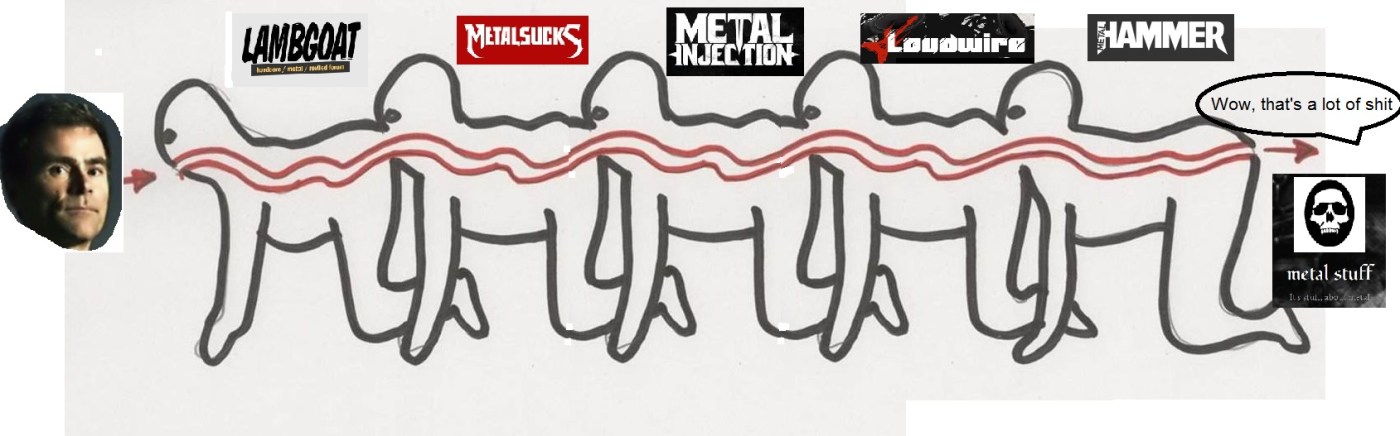


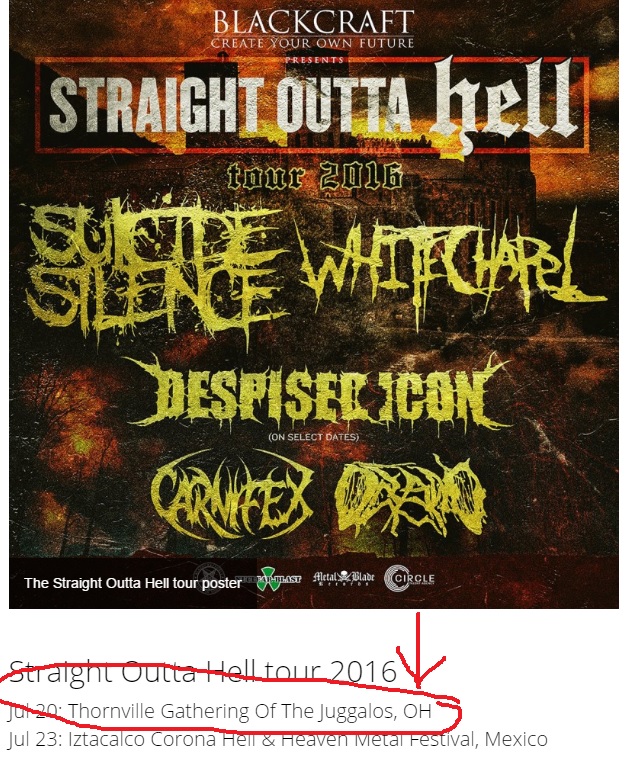




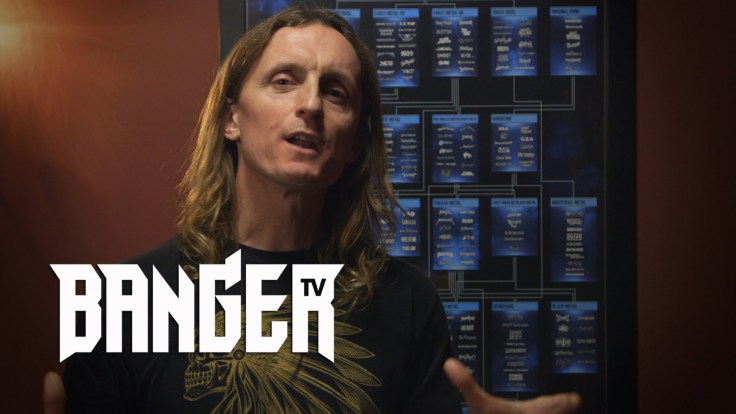
 Maybe the police will stop using pictures like this in training manuals?
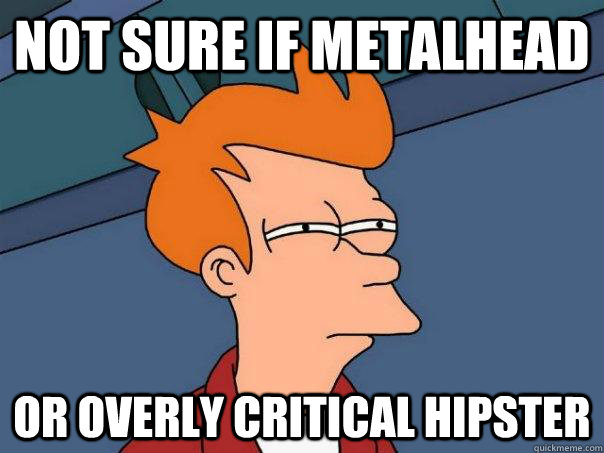


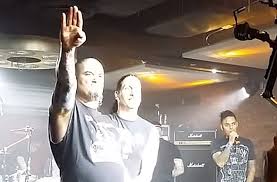


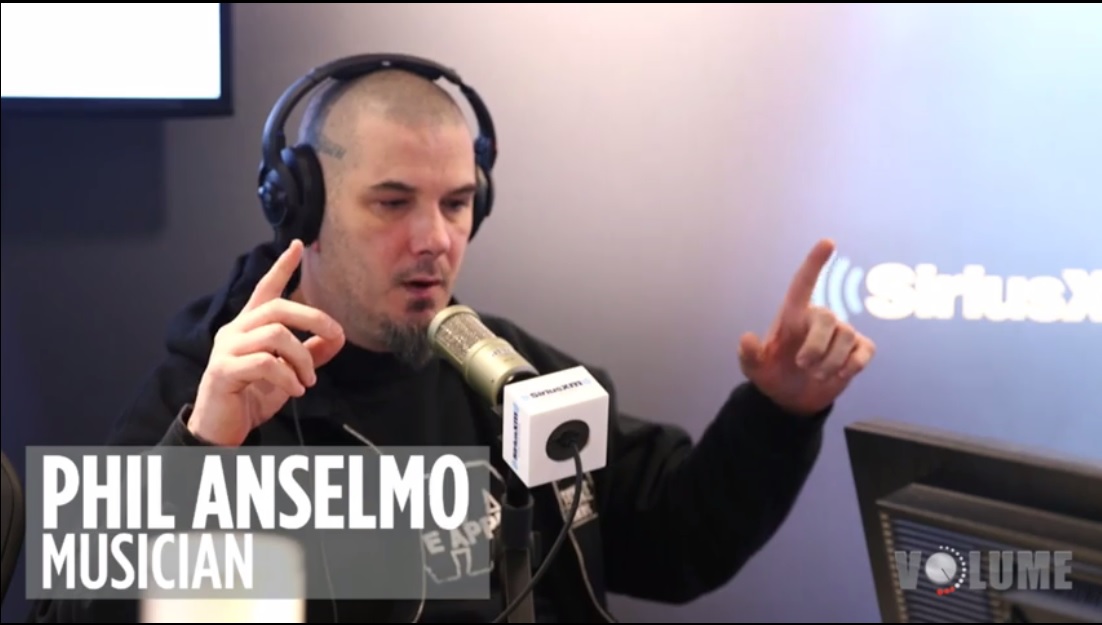

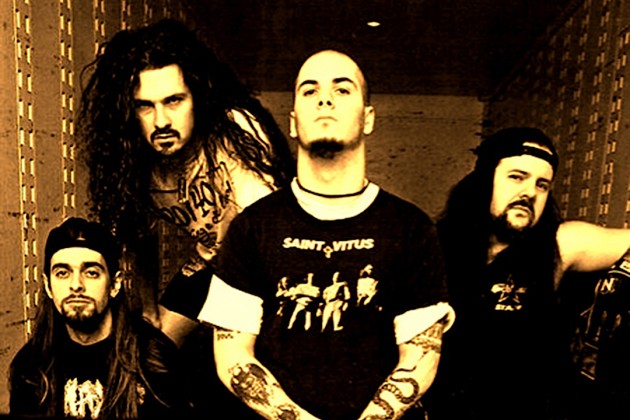


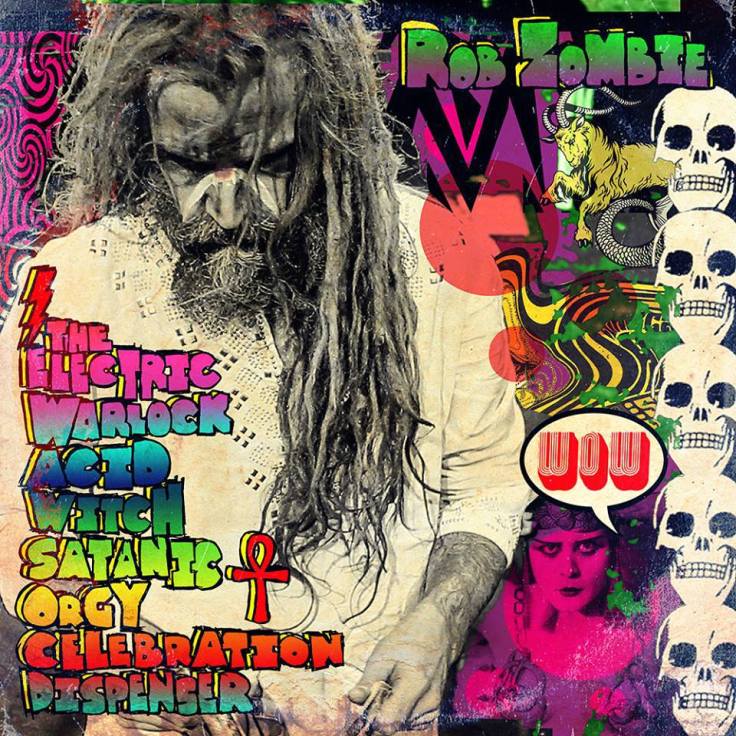
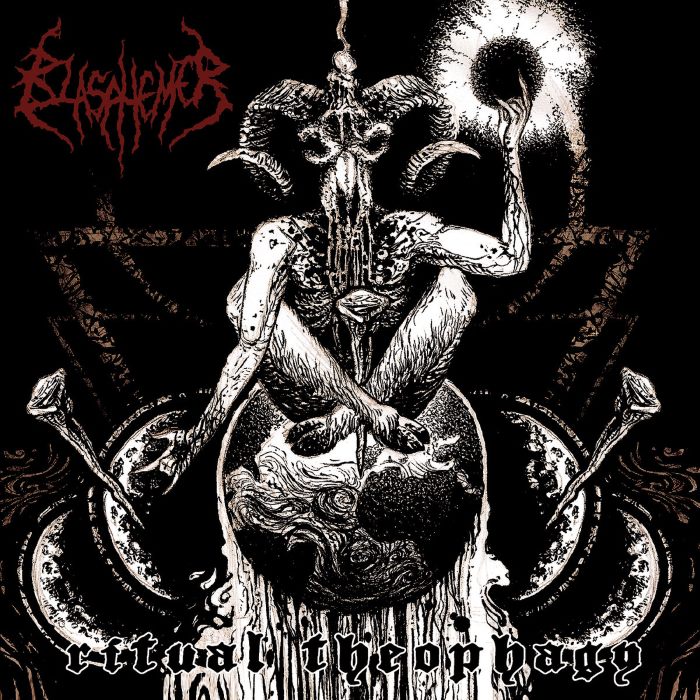
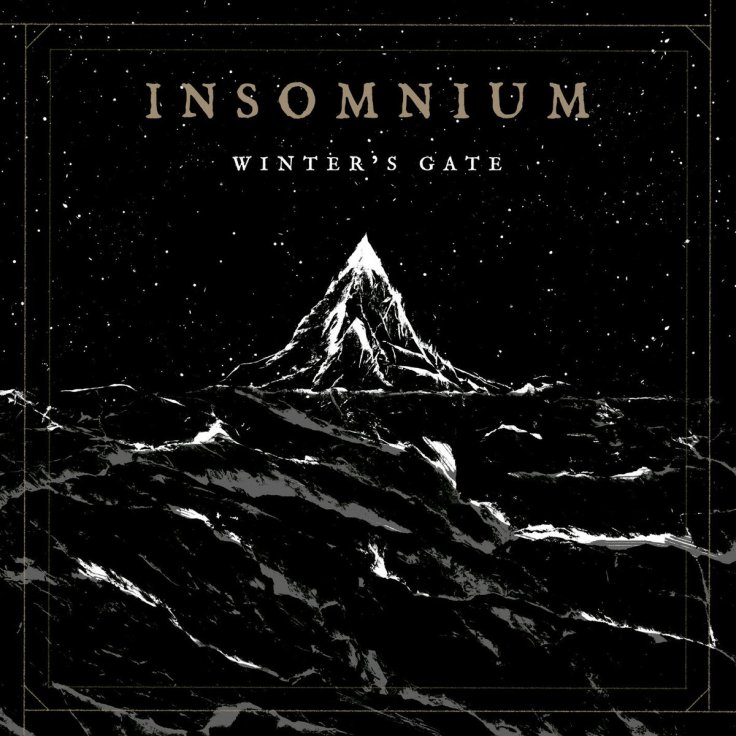
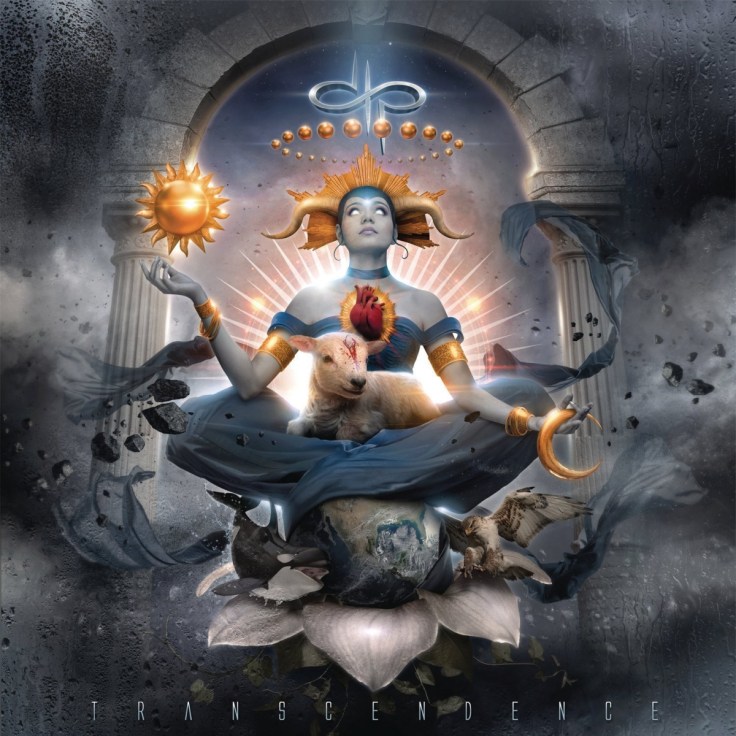


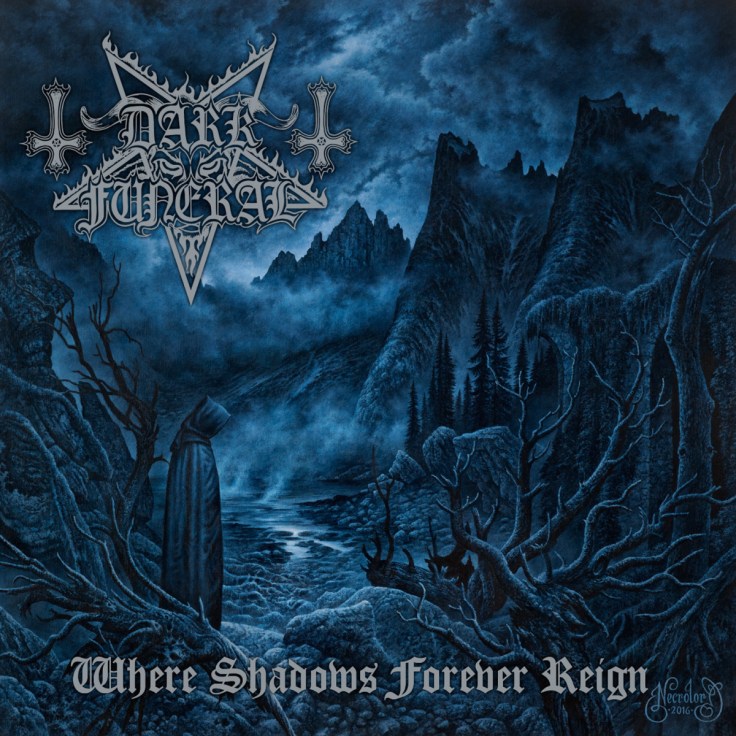









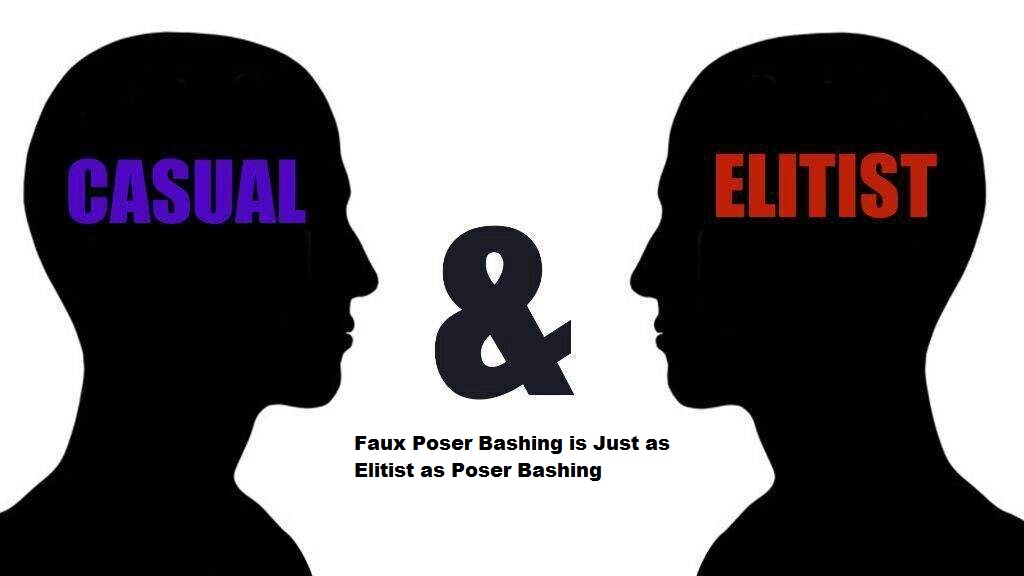


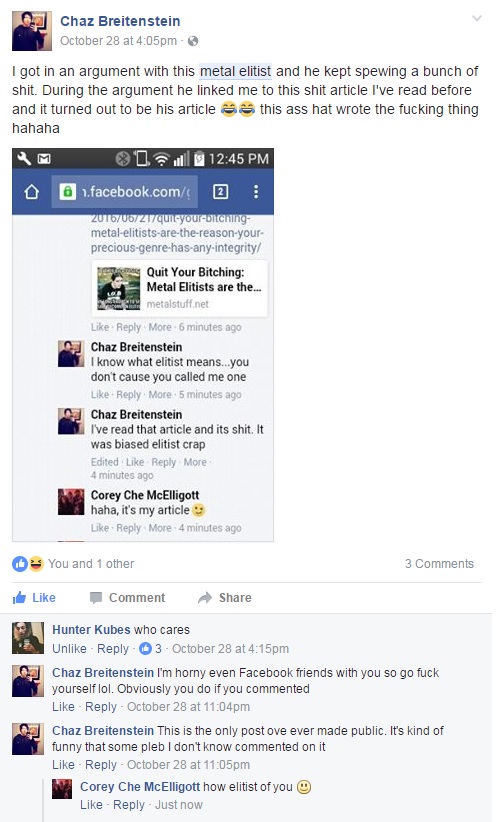


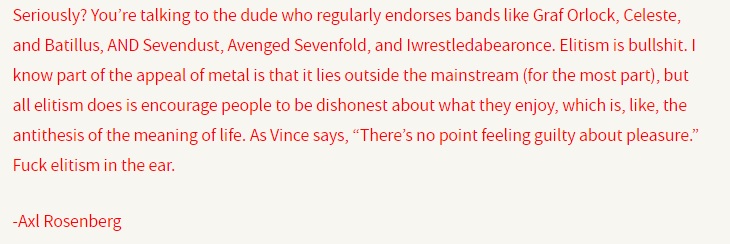
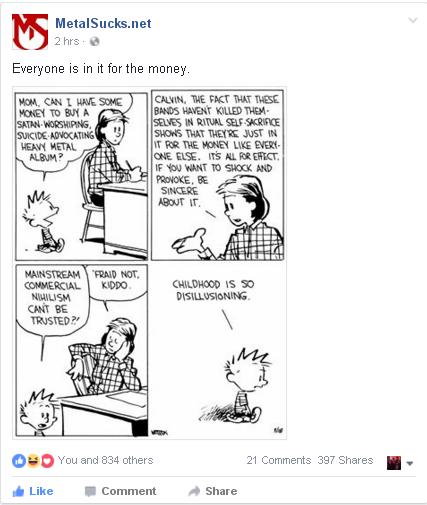
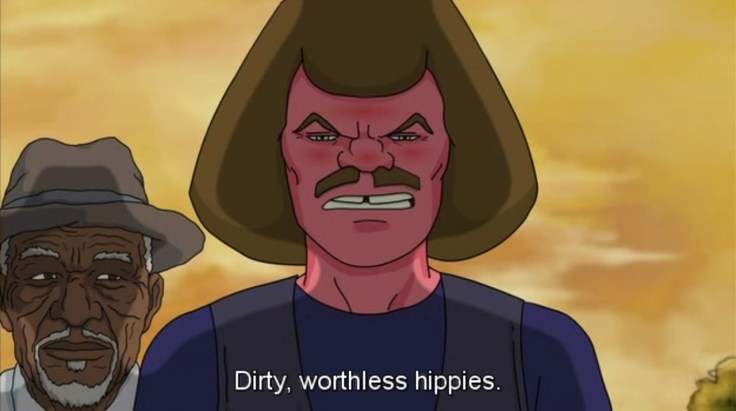
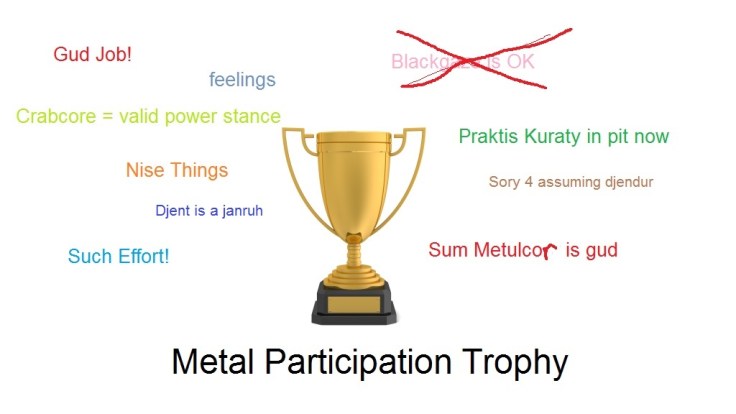



 metal stuff