Search

metal stuff

It's stuff, about metal

Tag

Sam Dunn

Global Metal Culture: The Rise of the Digital Metal Scene

The strangest thought hit me today – there are actually people alive and active in the metal scene that don’t know what it was like before the internet.

Stop and let that sink in for a minute.

(cliché reflective opening statement to blog post, check. god I’m getting good at this.)

Is the Internet the Last Major Metal Scene?

When speaking of a metal “scene”, generally people are speaking about a shared sub-cultural space where members are able to participate in the culture. For metalheads, this generally means bar and live shows. Or, at least, it used to.

With the advent of the internet, a person can completely immerse themselves in metal culture without ever physically meeting another metalhead. This isn’t without precedent – I have written previously about how metalheads had social networking before the internet. So really, the digital metal scene can be viewed as a natural evolution of the tape trading scene.

But this is a bit different. More all-encompassing. Scenes arise from the collective need for a sub-cultural space. The internet meets the needs of every metalhead, or at least allows for those needs to be met.

I’m not saying there won’t be local scenes in the future. Of course there will be, that’s the heart-blood of metal.

I AM saying there will never be another band (metal or otherwise) who gets big without the internet. Ever. So, what I AM saying is that the internet has become the largest possible metal scene – with pretty much every single metalhead on earth participating in some way, shape, or form.

The Internet Changed Everything

Metal’s Place in Society at Large

There’s a trade-off here. The best and worst thing about the digital metal scene is how easy it is to access and participate. Metal is no longer the pariah of the music world – it’s become (comparatively) safe in a cultural context.

There is always going to be metal that’s on the outside of what is considered “good taste” by the majority of Western Society – metalheads will make sure of that.

But Jesus Christ, when the President of the United States visits Finland and cracks a good-natured joke about the number of metal bands (per capita) – it’s safe to say the outsider status is gone.

So, lets take a brief look at how the digital age is affecting the unholy (hehe) trifecta of metal culture: Metal fans, metal bands, and the metal media.

How the Next Generation Experiences Metal (The Rise of Digital Metal Fans)

thumbnail_8390172479143014877

There is a generation of metalheads who, feasibly

  • never listened to heavy metal in an analog format.
  • never knew what purchasing music was like before Napster and other file sharing sites. (or torrents)
  • never had to stay up on a Sunday night to hear the ONE metal program on a radio station.
  • never had to play “album roulette”, going to a music store and finding the minuscule (if existent) metal section – and buying an album purely because it looked cool as fuck. Chances are, they won’t understand that every genre of metal has its own logo style for exactly this reason.
  • will never know what it was like to depend on ‘zines (specifically the classified section) to know what’s happening in metal.
  • have no idea what it’s like to be stereotyped by the police simply because they favor a style of music (well, maybe not as much).
  • have no fucking clue what the significance of MTV was to music in general, or why Headbanger’s Ball was such a big fucking deal.
  • have never paid 30 bucks for a CD
  • don’t have to rely on the metalhead “uniform” to find other metalheads.

This is literally a group whose experience with metal, and the metal community is so vastly different from previous generations of bangers as to seem almost alien. I think it’s funny – people have been so focused on how the internet and computers changed metal in the past few decades, that they’ve completely neglected to examine how it changed the fans (or even ask if/how it would).

Might it be logical to assume that, as their experience of metal culture is so vastly different – maybe it will change the fan base?

digital-metal

Metal Bands in the Digital Age (And the Digital Metal Bands)

Even the way new bands create and share music. Remember Job for a Cowboy? The first (and only, to my knowledge) metal band to successfully launch a major career in metal using Myspace? Fucking Myspace?!? I still remember getting messages and a friend request from the band when they were a bunch of unknown dudes from Texas.

Which brings me to deathcore. Sure, I shit on it all the time – 99% of deathcore bands are generic and boring. But if we’re being really, brutally honest here – 99% of thrash, death, and black metal bands are just as generic and boring. I write for an online magazine, and believe me – if the only good thing you can say about a band is that they have an old-school death metal/thrash/black metal sound or aesthetic – it’s a roundabout way of saying there isn’t much good you can say about the band.

Deathcore does have the distinction of being the first metal sub-genre to come to prominence through the internet. Metalcore stands kind of in between – half internet/half old-world. Djent gets a participation trophy.

metalcore

Nowadays, bands don’t need to physically amass a following to be heard – they just need access to a computer and pro-tools. Self-releases are more common than ever. In fact, record labels seem like they’re becoming almost vestigial. Bands can crowd-fund an album and write exactly what they want.

Speaking of music production – I guess the “American Metal Sound” is totally a thing now. Essentially it just means you have crystal clear production values and a “full” sound, but I’ve heard people from outside the US use this term to describe a lot of the Thrash albums that came out this year (i.e. Testament and Megadeth’s 2016 releases). Not that this is purely a deathcore related phenomenon – the New Wave of American Metal certainly influenced this as well – but I think it’s a nice change.

Sure, there’s a certain aesthetic associated with the production values of classic metal albums. But you can’t tell me you want every goddamn metal album for all eternity to sound like it was recorded inside a garbage can.

But I digress.

The Digital Metal Media

So yeah, this is the first generation who got their metal related news purely in a digital format. I mean, sure, for novelty’s sake a few people might go out and buy a physical magazine or two. But the medium is simply outdated. The only reason to get them is to act like a hipster or for genuine nostalgia.

dinosaur-metal
Dramatic Re-enactment of a “Dinosaur Metal” band

As such, a lot of the “dinosaur” metal publications were unable to get past their own bureaucracy (and mounds of paperwork) to get with the whole “information age” thing. Which isn’t really a bad thing, considering most of them got so far out of touch with the metal community. I’m really not sure how they kept going (Well, yes I am. They sold their souls and started catering to the tastes of 16-year-old girls. But that’s another topic altogether).

Interestingly enough, all the major metal news websites have conglomerated in exactly the same manner as the magazines did. Just like the old guard – they publish the exact same stories, they share writers, they cooperate on contests together. It’s a massive circle-jerk.

Lambgoat, Metalsucks, Metal Injection, Decible, theprp.com – they’re all in on it (example, they all use the blast beat network for their advertising). I guess life really does come full circle – reading these guys commentaries on metal culture is about as much fun as chewing on tinfoil (sorry, that’s an old person joke from way back in the day when they used mercury in fillings).

Capitalist bureaucracy at it’s finest, I tell you.

Metal’s Transition from Counterculture to Culture

Pretty much every metalhead who was alive and active in the scene before the internet remembers how things were. “How the internet changed metal” is a pretty popular topic to discuss in metal circles.

But I don’t think I’ve ever seen or read anything discussing the logical progression of the though/sentiment. If the internet changed metal bands, metal music, and metal media – isn’t it safe to say it significantly changed the fan base?

The biggest change I’ve noticed is that metal is no longer a counterculture.

Other sites have touched on the subject, but I don’t think anyone has really gone the extra few feet to discuss the logical implications (positive, negative, and neutral) for metalheads, and metal culture in general.

It isn’t hard to find other metalheads anymore. Besides going to concerts, hanging out at bars, randomly bumping into people in the metal section of your local music store, or (if you were lucky enough) having a metalhead crowd to hang out with when you were in high school – there was a point in time when it was actually a bit difficult to find other metalheads. We used to have to rely on “the uniform” (or people with a particular look) to find each other.

internet-metalhead2

A positive aspect of this is that heads can now use visual cues other than band shirts to find one another. Facebook metal groups abound, metalheads create their own digital sub-cultural space in popular forums. I think we can all collectively agree that talking shit about Metal Sucks in the comments section of every single one of their articles is one of the purest expressions of sheer collective joy metal culture has to offer it’s adherents.

A negative aspect of this is that although it’s not hard to find metalheads, metalhead interaction on the internet will never be as satisfying as interaction in person. This doesn’t just affect metalheads, in general people fall into the trap of substituting online social interactions for face to face interactions – and this can be very unhealthy. It makes confrontation and altercation infinitely easier, and therefore more inviting. In person, confrontations are a lot less likely, and the results of a confrontation are generally a lot more amicable to both parties. So yeah, there’s that.

OK, enough of this touchy feely shit. Back to the metal.

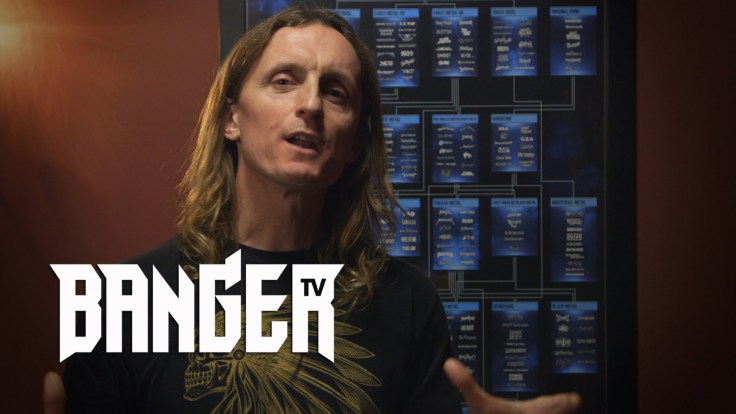
With online participation, metalheads are better able to come to a consensus as to what constitutes a sub-genre, and what bands fall where on the heavy metal family tree. And nobody, I mean nobody, has done a better job of this than Banger Films.
sam-dunn

Sam Dunn and the crew up in Canada are (in my opinion, and many others judging by their popularity) revolutionizing metal –  by bringing all the little mini-cultures that constitute metal culture into one shared sub-cultural space for the express purpose of documenting and furthering metal culture as a whole.

If you haven’t already, I highly recommend subscribing to their YouTube channel. Their revues are top-notch, the sub-genre episodes allow people to democratically discuss a particular section of metal in-depth and decide, democratically, on which bands fit within the categorization being discussed.

A Quick Recap

Let’s do a “Five W’s” test real quick.

What changed? Metal culture

Who changed? The three major aspects of metal culture – fans, bands, and metal media

Where did the change take place? The internet, of course.

Why did the change happen? The internet provided unprecedented access to metal culture, allowing for a universal allocation of sub-cultural space regardless of geographic location.

When did the change take place? It’s still happening, arguably it came to a head in 2000 with the Metallica/Napster dispute.

Conclusion(s)

I would argue that the internet is not just a logical progression of metal culture – it’s the logical conclusion of metal culture. 

When I say logical conclusion – I don’t mean that metal culture will be ending because of the internet. I mean that in terms of progress, it’s impossible for metal culture to move PAST the internet.

Tape Trading? You don’t have to peruse metal magazines and write letters, waiting on the postal service. New metal is literally at your fingertips 24/7.

Meeting new metal fans? Until there is a cultural space for social connections more efficient and all-encompassing than Facebook – there will never be a faster, easier way to meet and interact with other metalheads.

Metal news? Instead of waiting for magazines, we find out what’s happening in the metal universe almost in real-time. It’s just not possible to find things out any faster.

Metal bands don’t need to jockey for positions to be heard by major labels anymore – in fact, it’s (theoretically) possible for a band to gain mass popularity almost exclusively through social media (i.e. Job for a Cowboy, Vulvodynia, etc.).

Integration into greater culture? As much as is humanly possible – I don’t see people getting arrested for wearing metal shirts or being sent to camps for “de-metalizing” (a la the PMRC days of the 1980’s).

heavy metalistsMaybe the police will stop using pictures like this in training manuals? 

School shootings might still be blamed on metalheads now and then, but since the culture has become more visible (due to the internet) I think that’s a lot less likely. Occasional hate crimes against metalheads? Yeah, probably still a thing – anyone who looks “different” is going to be a target by small-minded clusters of mouth-breathers. With the “metal look” as big as it is right now in popular culture, I would even predict that sort of thing is on the decline.

poser

In other words, because of how convenient and efficient a tool the internet has turned out to be – I believe the final frontier of heavy metal (the music and it’s culture) has been reached.

It’s not a good thing, it’s not a bad thing.

It’s just a fucking thing.

No, Metalheads Aren’t All Supposed to Get Along

Introduction:

The Heavy Metal sub-culture is a patchwork tapestry of inter-related scenes and subcultures known as a bricolage culture. Viewed as a whole, it can be generalized that it’s dualistic in nature.

I’ve written articles detailing the inherent divide in heavy metal, as well as the current incarnation of that divide. Building on this body of work, the purpose of this article is to discuss the nature of the relationship between the mainstream and underground factions of the culture with the express intent of shedding some clarity on the nature of Heavy Metal Culture as a whole. Specifically, the nature of discourse between members of the culture in relation to the music.

Metal Culture is Inherently Populist

Due to societal reactions to metal since it’s inception, heavy metal culture at it’s core is inherently populist in nature.

What I mean by this is that heavy metal is a musical style that caters to the needs and desires of the fanbase – the consumers tell the artists what they want. This is exactly opposite to the business model of musical culture in general – where major labels and musical oriented media (from now on I will refer to it as the Pop Machine) tell people what to like.

Now, the standard musical model of “taste-makers” telling consumers what is good/popular has it’s benefits – mainly that musical boundaries are clear and concise. There is little to no room for discourse, because musical definitions and standards are pre-defined for the consumer. The consumer is free to take it or leave it, and discussion is set within certain parameters. However, the entire setup is contrary to what a lot of people understand art to be – a manifestation of individualistic expression that exists for personal interpretation.

One of the things that the pop machine has been pretty consistent about is it’s rejection of metal music. Since rock critics first started writing about Black Sabbath in the early 70’s, metal has been institutionally ignored, discarded, set to the side, and left to it’s own devices. Normally, this would mean the death of a musical movement – as a lack of radio play and media coverage by the pop machine is meant to squash out artistic movements that do not conform to the pop machine standard.

The Reactionary/Oppositional Component

A lot of the modern day prejudices against metal bands and fans are a direct result of the pop machine. The very survival of the musical style required a following that, in time, would become a culture. Critics touting the music as a low-brow art form that caters to the lowest common denominator since the 70’s literally set the tone for a key aspect of metal culture – it’s inherently oppositional nature.

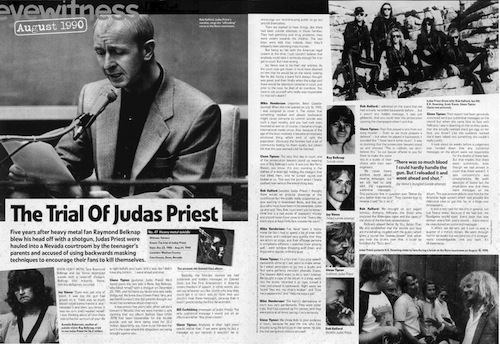
This nature served it well in the decades that followed. In the 80’s metal become the moral panic of the day – it was used to scapegoat aspects of the culture that then (then) conservative majority disliked. This peaked in the now infamous PMRC campaign that led to a (partially successful) congressional hearing in the United States relating to the censorship of ALL music.

preist

Conservatives opposed heavy metal culture due to it’s inherent opposition to authority, and Liberals opposed it due to the admitted hedonistic nature and low-brow appeal. The church opposed metal culture because, well, metal culture opposed the church in most cases. The music and it’s culture were under constant scrutiny and assault for the better part of a decade. This is not an environment that breeds “happy go lucky” or “inclusive” cultural traits. And the 90’s weren’t much better for metal. The police were trained to target metal fans as criminal lowlifes. The pop machine declared metal dead (wishful thinking?). When a few sick kids in Columbine got together and planned a horrible school shooting, heavy metal was the scapegoat. And so on, and so forth.

heavymetalarticle1

A Quick Recap

So, we can see that for (at least) the better part of 30 years heavy metal culture continued to exist specifically because of it’s oppositional nature. And the nature of that culture is reflected in it’s membership. Metalheads, by and large, have a confrontational and aggressive component to their personalities. It’s not up for debate, it’s just a fact. This may seem contrary to scientific studies that state exactly the opposite (that metal fans are creative, easy going, introverts with high self esteem – closer to the profile of a classical music fan) – but it all makes sense in context, so please bear with me as I stumble through an explanation.

I think metalheads, in large part, are attracted to metal because it offers a healthy outlet for negative emotion (i.e. the aforementioned aggressive/confrontational proclivities). Without all those pent up, negative emotions an individual is better able to function – so the personality traits displayed in scientific studies are expressed.

So, while metalheads may be more well adjusted than your average person – they still retain an inherent combative/oppositional nature. The culture reinforces this, and the attitudes then reinforce the cultural position – it’s cyclical.

Back to the Present Day

Applying this to the present state of heavy metal gives a little context and clarity to the situation. As noted by Sam Dunn in one of his Banger segments (I believe it was the one discussing metal in popular fashion) – heavy metal has lost a lot of it’s “outsider” status. It’s not as culturally threatening as it was even a decade ago. As such, major opposition to heavy metal has virtually disappeared – but that confrontational nature still exists. The most common expression of this is through infighting.

Some people might scratch their heads at this, but it makes perfect sense. I’ve heard metal culture referred to as a “big family”, “friends you’ve never met”, and a bunch of similar pseudo-hippy garbage terms. A more accurate description would be that metalheads constitute a “neo-tribal culture” based around a common appreciation for an art form.

So, tribe/clan/family unit are all pretty much synonymous – but there’s an inherent flaw in the way that most people view these terms. The problem is that they’re using a romantically charged view of a family unit or tribe. We’re conditioned as individuals to view families as some lovey-dovey unit that never disagrees. The reality of the situation, whether you like to admit it or not, is muuuuuch different.

Reality v.s Expectation

So, however you want to frame it, the reality of the situation is that the “metalheads are a family” comparison is very accurate. Anyone who feigns surprise that metalheads are going to argue is only kidding themselves (and clinging to a romanticized false notion of a family). It’s as natural as tribal warfare, sibling rivalry, or family feuds (those colloquialisms weren’t just plucked out of thin air).

The thing is, there’s another side to this. Besides all the bickering and feuding – there’s an unwritten rule that applies to both family members and metalheads. I’ll give an example – I’m the only person allowed to talk shit about my family. If anyone else does it, they get the business end of my entire fucking family.

It’s very similar with metal – and this isn’t just theory. Remember the PMRC hearings? Death metal and Thrash weren’t the direct target of that scandal – it was (predominantly) hair metal. Was Dee Snider left to fend for himself? Fuck no he wasn’t – because the only people who can bash hair metal are metalheads.

The same principle stands true today – if there was a large entity attacking heavy metal (using a metalcore or deathcore band as a scapegoat), they would meet with a much larger resistance than originally anticipated – because that’s how the metal machine operates (note – blackgaze isn’t metal so, assuming they managed to offend anyone, I personally would totally throw them to the wolves).

Conclusion

The infighting within metal culture is a good thing, and it’s totally natural. Granted, some of the bigger sites (that started as independent but have since become part of the pop machine) might egg it on for money and website traffic – but they’re not pulling conflict out of nowhere. It’s a natural expression of metal culture, and an acceptable form of participation that (among other things) creates an environment where competition is encouraged.

Competition in the metal scene creates better music.

Last I checked, that’s called winning.

I guess the message here is that newcomers to the metal community need take a step back so they can see the forest for the trees. Because Metal Culture fucking rules, infighting and all.

The Two Faces of Metal

I was talking with my friend Raven from “The Vault of Metal” the other day about an interview with Chester Bennington from Linkin Park, in which he stated, “In my opinion, we actually kept metal alive.”

Now Raven (who isn’t alone in this opinion) contends that the “metal” as represented by bands like Linkin Park, Disturbed, Five Finger Death Punch, Slipknot, and the like isn’t even metal. There are elements of this statement that I sort of agree with, but I have to respectfully disagree with the overall statement.

The reason I disagree is because I think there’s a more accurate way to look at the situation. Metal has two faces, a public (or mainstream) face and a private (or underground) face. This isn’t some new or revolutionary observation – it’s an argument that’s been going on since the genre fractured. It’s been covered by every single major metal sociologist; Deena Weinsteen (Heavy Metal: The Music and Its Culture and Heavy Metal: A Cultural Sociology), Robert Walser (Running With the Devil: Power, Gender, and Madness in Heavy Metal Music), Ian Christe (Sound of the Beast: The Complete Headbanging History of Heavy Metal), Malcolm Dome (The bible of Heavy Metal: Encyclopaedia Metallica, Thrash Metal), Keith Kahn-Harris (Extreme Metal: Music and Culture on the Edge), Sam Dunn (Metal: A Headbanger’s journey, Global Metal, Metal Evolution, Banger Films) in some form or another.

The reason that metal culture as a whole can have these opposing factions is because it isn’t a single, unified culture. It’s what’s commonly referred to as a bricolage culture – a hodgepodge collection of distinct groups and scenes with a unifying theme (metal) that form a complete culture.

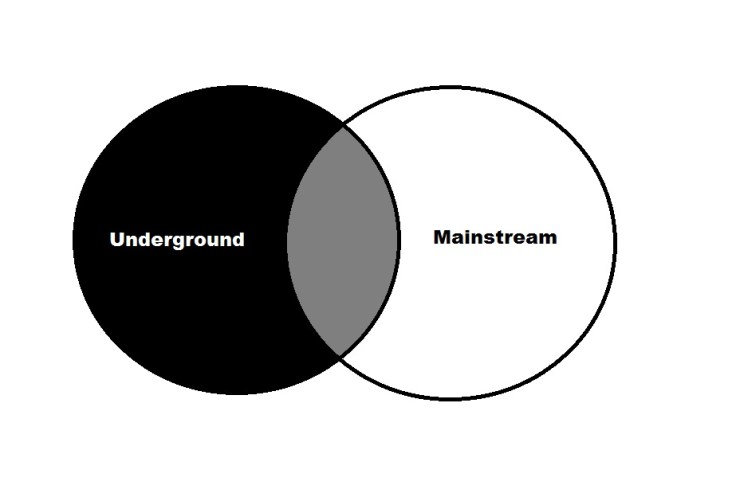
For the purpose of this article, metal can be viewed like this;
twofaces

Both sides have their positive and negative aspects. An underground band has the ability to gain a significant amount of credibility within the scene, at the expense of a smaller fanbase. A mainstream band has the monetary advantage, as mainstream viability means you’re reaching a broader audience. However, the price of mainstream popularity comes at the expense of a band’s credibility within the broader metal scene. And in metal, credibility is everything.

Bands are not stuck in a single category, movement between these areas is fluid – but with a catch. They can only move in one direction. A mainstream band cannot under any circumstances move back to the underground. An underground band, however, has the ability at pretty much any point in time to move to the mainstream. There’s even a (often overused) term for when a band moves into mainstream territory – selling out.

To become popular, most underground bands tend to try and stay in the grey area between mainstream and underground – maximizing the size of their audience while sacrificing as little credibility as possible.

So, it’s not really a dichotomy. It’s more of a “collage spectrum” that’s defined by the polar extremes.

Cultural fracture point – when metal gained two identities

When metal actually fractured into these two distinct categories (mainstream and underground) is up for debate. The divide became recognizable when Thrash (underground) and Glam (mainstream) arose as two distinct entities in the 80’s. That’s when we got terms like “lite metal“, which were used by members of the underground community to refer to their mainstream counterparts.

Arguably, the divide between mainstream and underground metal goes back another generation. When Def Leppard refused to be associated with/included in the NWOBHM, band members stated it was because they wanted their band to be associated with the greater “hard rock” category (as opposed to the niche underground genre that NWOBHM was at the time). And if you look at the first wave of mainstream metal (Glam), you can clearly see it’s roots in the styles of both Def Leppard and Led Zeppelin.

I think it’s worth mentioning that bands that existed within the cultural sphere of heavy metal before the mainstream/underground fracture are immune to this classification. It was created to differentiate the new bands, and any attempt to use them as anything else would be inaccurate.

Metal in the Mainstream

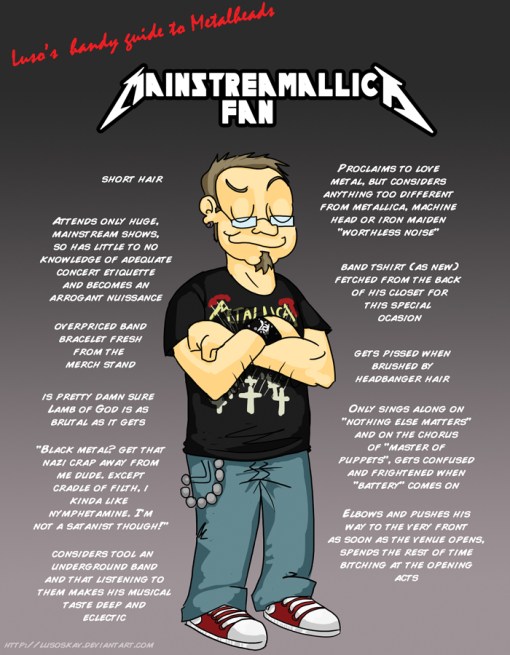
mainstreamallica fan


It all started with Hair Metal/Glam in the 80’s, which combined metal with popular hard rock from the time period. And as with anything mainstream, hair metal was beholden to corporate influence. So when the music industry had completely exhausted the genre (through formulaic “clone” bands and over-promotion), they moved on to “the next big thing” and declared metal dead. So, in the eyes of mainstream culture – metal had died. And in it’s place was a new mainstream genre – Grunge.

Grunge was effectively the anti-thesis of hair metal. It’s combination of metal and alternative rock pushed apathy and mediocrity as a counterpoint to hair metal’s excitement and over the top excess.

In fact, the only thing I can think of that Glam and Grunge have in common is the incredible amount of heroin band members from both genres consumed. Which, in it’s own way, helped define their shelf lives. I guess every cloud has a silver lining.

Then in the mid 90’s a new mainstream contender entered the arena – Nu Metal. Combining rap with elements of alt-rock/grunge and heavy, down tuned riff oriented metal on (typically) seven string guitars. While musically much more aggressive and exciting than it’s predecessor, it remained a relatively simple and easily digestible form of metal that was fit for mass consumption and easily duplicated by the record industry.

The mid 2000’s saw the fall of Nu Metal and the rise of Metalcore. Taking the already established hardcore/metal fusion that had been mixing with the Gothenburg brand of Melodic Death Metal (and adding the signature whiney Emo vocals), metalcore took the mainstream by storm.

Nowadays, as metalcore is waning in popularity, bands like Periphery and Liturgy are crossing one of underground metal’s more extreme sub-genres (Black Metal) and mixing it with apathetic, “self absorbed posing as introspective” hipster Indie rock genres like Shoegaze  to create the musical abomination known as blackgaze. Combined with the large number of bands aping djent and mixing it with mainstream influences, it’s only a matter of time until we see the next big trend in popular metal.

I’m not sure where the fuck Five Finger Death Punch fits into all this, probably the fact that they mixed the groove metal of Pantera with mainstream hard rock. However you want to categorize them, calling them anything other than mainstream metal is a disservice to the intelligence of both the speaker and the listener.

Metal in the Underground

death-metal-bands
(This is where the magic happens)

Recently Thrash, Death, and Black metal have all been encompassed into an overarching umbrella term – Extreme metal. A fair description, as they all tend towards extremity. I like the term, and it puts all the bands in a proper context – all extreme metal is in some way shape or form a derivative of the thrash metal movement of the 80’s, although bands such as Celtic Frost, Bathory, and Venom (generally dubbed the “first wave” of black metal) also serve as the genre’s precursors. I’m pretty sure Keith Kahn-Harris does a better job explaining it all in his book. Also, Sam Dunn did an excellent crowdfunded “lost episode” of his series Metal: Evolution dealing with the subject.

Exceptions

While metal has been, since it’s inception, a predominantly underground phenomenon, when referring to “underground metal” people are generally talking about thrash and it’s derivatives. Like I mentioned earlier, this split happened after bands like Sabbath or Maiden hit the radar, so while they would fit the mold for underground metal – they also (by standing the test of time) fit into the mainstream metal category. They’re neither and they’re both.

It is interesting to note that in the vein of these classic bands, metal in the underground follows a generational musical progression that’s the only consistent pattern in heavy metal since it’s inception – the new stuff is always heavier. It’s harder, it’s faster, it’s more distorted, and it’s progressively more socially transgressive. Sam Dunn touched on this in his first movie, Headbanger’s Journey – new generations of bands continue to strive to sound heavier than the generation before them.

Conclusions

In context, Raven’s assertion that the “mainstream” metal bands aren’t metal at all is technically true. In every incarnation, the thing mainstream metal bands all have in common is that they dilute heavy metal by mixing it with a more “palatable” style of music. With hair metal, it was diluted with hard rock (including rock ballads, ugh). Grunge watered the heaviness down with popular college alternative rock. Nu Metal did it with rap and alt rock. Metalcore did it with emo. And modern day hipster bands do it with Indie rock (Indie meaning hipster/millennial co-opted melancholy, boring, crap rock – not indie as in independent… there’s a huge independent streak in underground metal).

Saying these mainstream bands “aren’t real metal” isn’t (generally) meant as an insult, it’s an attempt to keep accuracy in the conversation. Metal is generally viewed as genealogical, so an example of that ilk might bring some clarity.

If you breed a horse and a donkey together – the resulting creature is called a mule. It’s not a horse, and it’s not a donkey. The two animals are closely related and branch from the same evolutionary family, but distinct enough to warrant a different name for each distinct species. A mule, the resulting offspring from the union of the species, cannot accurately be called a horse or a donkey because it is equal parts horse and donkey. However if the mule proves fertile (most often they’re not) and is bred with another horse, the resulting offspring will be categorized as a horse.

Substitute “metal” for “horse”, and “rock” for “donkey”, and you essentially have the entire argument against “mainstream metal” being considered part of the metal family tree (instead being relegated back an evolutionary step to the “hard rock” category). If any of the mainstream/popular genres spawn/influence new music by being crossed back with metal genres – the result is considered to be part of the metal tree.

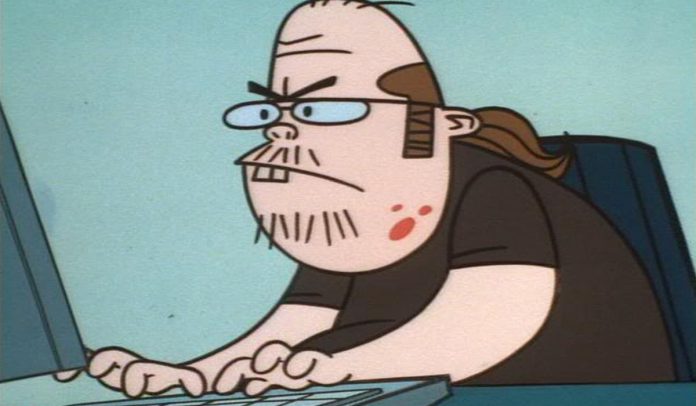
I always figured this sort of knowledge was just a given, but apparently it’s not. the massive amount of butthurt expressed online by hipsters and others outside the metal community when they’re improper use of terminology is corrected just seems to be part of the social landscape.

This duality within the genre is also the source of endless frustration expressed in memes like this gem…

girlswholistentometal

Now, as someone who was a pretty big fan of Nu Metal, I might be a tad biased in my opinion. I prefer a touch of holism with my definition of metal – while I’m predominantly a fan of the underground/extreme branch of the metal family tree, I refuse to discount the importance of mainstream metal bands to the culture.

First and foremost, they represent the social gateway into greater metal culture. Nobody starts off listening to Extreme Metal, taste progression in metal is generally a process – and “Gateway Metal” bands generally kick-start the process. They also represent the metal community to the mainstream in other respects.

When the PMRC kickstarted congressional hearings on heavy metal in the 80’s, they completely neglected to mention underground bands. It was Dee Snider of Twisted Sister who went and spoke for the genre, and completely exposed the entire debacle for what it was – a modern day witch hunt. Slipknot and Marilyn Manson (as well as Ozzy, Preist, and Maiden – but if you’ve been reading they’re excluded from this classification as they encompass both mainstream and underground characteristics) were publicly scapegoated as the reason behind public controversies. From grave robberies to school shootings, as soon as heavy metal is found in the mix it’s automatically considered the cause.

So, these aren’t just the people who recruit new member to the metal cause, they’re the ones who defend it in the public eye. They also transmit the norms of metal culture to new recruits. Considering these critical roles mainstream metal bands play in the overall culture, I don’t believe it is accurate to call them anything other than metal.

This doesn’t mean I won’t call a spade a spade, mainstream metal is gimmicky as hell and has a lot of elements of mainstream culture I generally try to avoid. But you can like, or at very least appreciate, a band and the role they play in overall culture without dismissing them because they A) fill a different cultural niche than underground bands and B) don’t conform to a minimalist definition of metal.

Shameless plug, if you like what you read feel free to join my metal facebook group Metal Stuff.

Create a free website or blog at WordPress.com.

Up ↑